
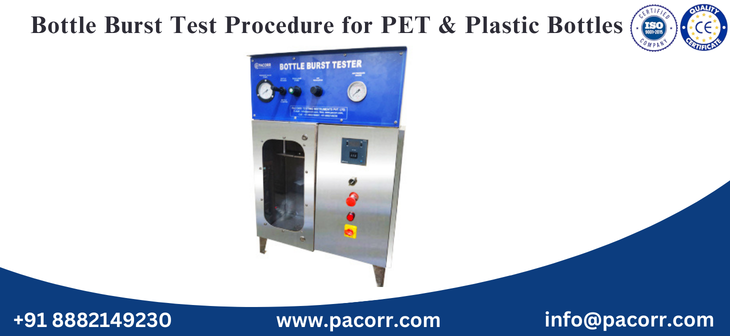
Bottle failure does not happen in theory. It happens during filling, transportation, storage, or customer use. A single bottle burst can result in product loss, safety risks, and brand damage.
A Bottle Burst Tester is a critical quality assurance instrument used to verify whether PET and plastic bottles can safely withstand internal pressure under real-world conditions.
This page explains the Bottle Burst Test Procedure in a practical, industry-ready format designed for manufacturers, quality engineers, and decision-makers.
Search Intent Alignment
Users searching for Bottle Burst Tester are typically looking for:
- A clear explanation of bottle burst testing
- Step-by-step testing procedure
- Application for PET and plastic bottles
- Quality control and compliance benefits
- Validation before purchasing or using a tester
This content is structured to meet informational, commercial, and transactional intent in a single landing page.
What Is a Bottle Burst Test?
A Bottle Burst Test evaluates the maximum internal pressure a PET or plastic bottle can withstand before:
- Leakage occurs
- Structural deformation begins
- The bottle bursts
The test simulates real operating conditions such as carbonation pressure, temperature variation, and transportation stress.
What Is a Bottle Burst Tester?
A Bottle Burst Tester is a precision testing instrument that applies controlled internal pressure to bottles and records failure points.
It measures:
- Burst pressure value
- Leak pressure point
- Pressure holding capacity
- Structural integrity of the bottle
The tester provides digital pressure readings in Bar or PSI and ensures repeatable, accurate results.
Applications of Bottle Burst Tester
Bottle burst testing is essential in the following industries:
- PET bottle manufacturing
- Carbonated beverage packaging
- Drinking water bottling
- Pharmaceutical packaging
- Cosmetic and chemical containers
Why Bottle Burst Testing Is Critical for PET & Plastic Bottles
PET and plastic bottles are lightweight and cost-efficient, but pressure-sensitive.
Bottle burst testing helps to:
- Prevent leakage during carbonation
- Avoid transportation and storage failures
- Meet customer and regulatory specifications
- Reduce product rejection and recall costs
- Improve overall packaging reliability
Bottle Burst Test Procedure (Step-by-Step)
Step 1: Sample Selection
- Select bottles randomly from the production batch
- Ensure bottles are clean and free from visible defects
- Prefer testing filled and capped bottles for realistic results
Step 2: Bottle Mounting
- Place the bottle securely on the bottle burst tester
- Seal the bottle mouth using appropriate fixtures or adapters
- Ensure airtight sealing to prevent external leakage
Step 3: Pressure Application
- Apply internal pressure gradually
- Use controlled pressure ramp mode
- Avoid sudden pressure increase to ensure accuracy
Step 4: Observation and Monitoring
During the test, monitor:
- Bottle deformation
- Micro-leakage points
- Sudden rupture or burst
The bottle burst tester automatically records:
- Pressure at first leakage
- Pressure at burst point
Step 5: Result Evaluation
- Compare recorded values with internal quality standards
- Validate against customer or regulatory requirements
- Approve or reject the batch based on test results
Typical Bottle Burst Pressure Values (Reference)
|
Bottle Type |
Approximate Burst Pressure |
|---|---|
|
250 ml PET Bottle |
12–14 bar |
|
500 ml PET Bottle |
10–12 bar |
|
Water Bottles |
6–8 bar |
|
Pharmaceutical Bottles |
5–7 bar |
Actual values vary based on bottle design, wall thickness, and raw material quality.
Common Mistakes in Bottle Burst Testing
Many quality failures occur due to incorrect testing practices.
Avoid the following mistakes:
- Testing empty bottles instead of filled bottles
- Increasing pressure too rapidly
- Ignoring temperature and storage conditions
- Using uncalibrated bottle burst testers
- Skipping routine testing intervals
Expert Best Practices for Accurate Results
- Test bottles after 24 hours of production
- Perform both leak test and burst test
- Maintain documented burst test records
- Calibrate the bottle burst tester at regular intervals
- Test under actual usage and storage conditions
These practices significantly improve result reliability and audit readiness.
Frequently Asked Questions (AEO Optimized)
What is the purpose of a Bottle Burst Tester?
A Bottle Burst Tester determines the maximum pressure a bottle can withstand before leaking or bursting, ensuring packaging safety and reliability.
Is bottle burst testing mandatory?
For carbonated beverages, pharmaceutical products, and export packaging, bottle burst testing is strongly recommended and often required.
How often should bottle burst testing be performed?
Testing should be conducted per production shift or whenever there is a change in raw material, mold, or bottle design.
Can PET or plastic bottles fail without visible defects?
Yes. Internal stress points can cause sudden leakage or burst without external signs.
On-Page SEO Optimization Recommendations
- Internal linking opportunities:
- PET bottle quality testing
- Bottle leak testing methods
- Packaging strength testing standards
- Image alt text suggestions:
- Bottle Burst Tester for PET bottles
- Plastic bottle burst test procedure
- Keyword placement:
- Title, headings, procedure steps, FAQs, and conclusion
- Natural usage without keyword stuffing
A Bottle Burst Tester is not optional equipment for modern packaging operations. It is a quality assurance necessity.
By following the correct Bottle Burst Test Procedure, manufacturers can:
- Ensure packaging safety
- Prevent market failures
- Meet compliance requirements
- Protect brand reputation
Strong packaging begins with verified pressure performance.
If your operation involves PET or plastic bottles under pressure, implementing the right Bottle Burst Tester and testing procedure is critical.
Contact a packaging quality expert today to ensure your bottles are market-ready, compliant, and failure-free.
Recent Blogs
Enhance your understanding of testing and precise quality control indistinct applications with our
knowledge based articles coming from top editors of industry leaders.
Thanks to Pacorr Testing instruments, we have all the required quality testing instruments that have helped us to ensure the best quality delivered to our clients.

Danish
Fair Exports Pvt. Ltd.
