

Measuring weight in Grams per Square Meter (GSM) is a fundamental quality check in packaging, paper, and textile industries. Accurate GSM measurement ensures materials meet required standards for durability, performance, and cost-effectiveness. Whether you are producing paper sheets, packaging materials, or fabrics, understanding how to measure GSM correctly is crucial for maintaining product consistency and quality. In this blog, we guide you through manual and instrumental methods to measure GSM, highlighting Pacorr’s highly accurate GSM testing instruments specifically designed for professional use.
What is GSM?
Grams per Square Meter (GSM) refers to the mass of a material in grams calculated over an area of one square meter. It is a vital metric indicating the thickness and density of materials like paper, boards, textiles, and packaging films. GSM helps manufacturers, buyers, and quality testers understand material strength, durability, and suitability for specific applications.
Why GSM Matters in Packaging?
GSM measurement plays a critical role in packaging as it impacts:
- Product protection: Higher GSM materials generally offer better protection.
- Cost control: Knowing GSM helps optimize material usage and cost.
- Compliance: Industry standards often specify GSM ranges for packaging grades.
- Performance: Tensile strength, printability, and barrier properties often correlate with GSM.
How to Calculate GSM?
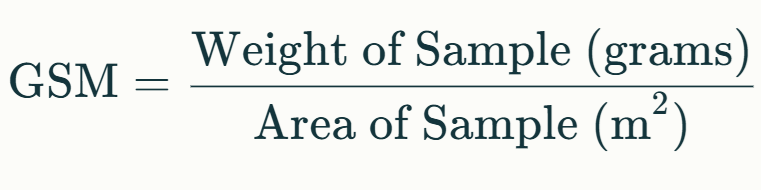
GSM can be calculated using this simple formula:
Step-by-Step Guide to Measure GSM Manually
- Cut a Sample: Cut a precise sample area from your material, commonly a 10 cm x 10 cm square (0.01 m²).
- Weigh the Sample: Use a digital scale accurate to at least 0.01 grams.
- Calculate GSM: Multiply the sample weight by 100 (since 0.01 m² × 100 = 1 m²).
For example, if the sample weighs 1.5 grams,
GSM=1.5 g×100=150 gsm
GSM Testing with Pacorr Instruments
For enhanced accuracy and efficiency, Pacorr’s GSM testers provide fast and reliable results. These instruments are specifically engineered for material testing environments like labs or production lines. Benefits of Pacorr GSM testers include:
- High precision sensors for exact GSM readings.
- User-friendly interfaces simplifying operation.
- Fast measurement cycles to increase throughput.
- Calibration features ensuring consistent accuracy.
Using a Pacorr GSM tester involves simply placing the material on the testing platform, and the device automatically calculates the GSM value. This eliminates manual errors and saves time, making Pacorr’s testing instruments ideal for industries requiring stringent quality control.
Frequently Asked Questions (FAQs)
What is GSM in packaging?
GSM in packaging indicates the weight of the packaging material per square meter, directly relating to its strength and durability.
How to use a GSM tester?
Place the material sample on the tester's platform according to the device instructions. The tester will display the GSM reading automatically.
Why is manual GSM measurement still used?
Manual measurement is useful for quick checks or where sophisticated instruments are unavailable.
Can Pacorr GSM testers be used for textiles?
Yes, Pacorr’s GSM testers are designed to measure various materials including textiles, papers, and packaging films.
How often should GSM testers be calibrated?
Calibration frequency depends on usage but is recommended regularly to maintain accuracy.
Conclusion
Accurate GSM measurement is essential for ensuring material quality and meeting industry standards in paper, packaging, and textiles. While manual techniques provide basic checks, investing in Pacorr GSM testers enhances precision, speed, and efficiency in quality control processes. Explore Pacorr’s range of GSM testing instruments today to experience trusted accuracy tailored to your industrial needs.
Recent Blogs
Enhance your understanding of testing and precise quality control indistinct applications with our
knowledge based articles coming from top editors of industry leaders.
Thanks to Pacorr Testing instruments, we have all the required quality testing instruments that have helped us to ensure the best quality delivered to our clients.

Danish
Fair Exports Pvt. Ltd.
