
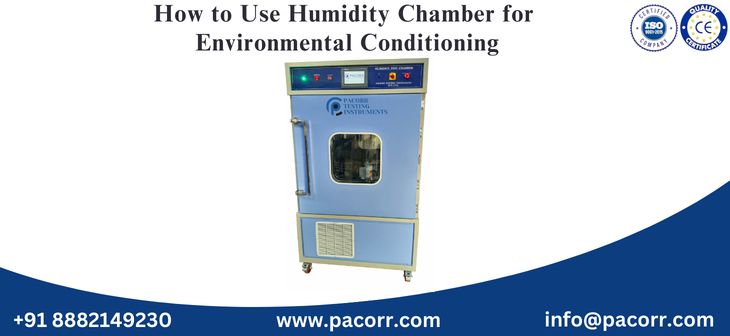
Pacorr brings advanced environmental testing solutions to industries that demand precision, reliability, and consistent performance. In today’s quality-driven market, controlling environmental variables such as temperature and humidity is essential for product durability and compliance. This is where a Humidity Chamber plays a vital role. From packaging and electronics to pharmaceuticals and automotive components, environmental conditioning ensures that products withstand real-world conditions before reaching customers.
In this comprehensive guide, we’ll explore how to use a Humidity Chamber for environmental conditioning, understand its benefits, learn about pricing factors, and discover why Pacorr is a trusted name in testing equipment solutions.
What is a Humidity Chamber?
A Humidity Chamber, also known as a Conditioning Chamber, is a specialized testing instrument designed to simulate controlled temperature and humidity conditions. These chambers allow manufacturers and laboratories to test how materials, products, or components react under specific environmental conditions.
The chamber replicates extreme or stable environments such as high humidity, low humidity, elevated temperatures, or fluctuating climatic conditions to evaluate:
- Product durability
- Material stability
- Corrosion resistance
- Packaging integrity
- Shelf life
Industries that widely use humidity and conditioning chambers include:
- Packaging
- Electronics
- Automotive
- Pharmaceutical
- Food & Beverage
- Textile
Why Environmental Conditioning is Important
Environmental factors significantly impact product performance. Excess moisture can cause corrosion, mold growth, adhesive failure, and degradation of packaging materials. On the other hand, extremely low humidity can lead to cracking, brittleness, and static discharge issues.
Using a Conditioning Chamber helps manufacturers:
- Ensure product reliability
- Meet international quality standards (ASTM, ISO, etc.)
- Reduce product returns and failures
- Improve customer satisfaction
- Maintain compliance with regulatory guidelines
By simulating real-world conditions in a controlled setting, companies can identify potential issues before products enter the market.
How to Use Humidity Chamber for Environmental Conditioning
Using a Humidity Chamber properly ensures accurate test results and long-term equipment performance. Follow these steps for effective environmental conditioning:
1. Prepare the Samples
Before placing products inside the chamber:
- Ensure samples are clean and free from contaminants
- Label samples clearly for identification
- Arrange them to allow proper air circulation
Proper placement ensures uniform exposure to temperature and humidity conditions.
2. Set the Desired Temperature and Humidity
The control panel allows you to program:
- Relative Humidity (RH%)
- Temperature range
- Test duration
Most advanced Humidity Chambers from Pacorr feature digital controllers with user-friendly interfaces, ensuring precise and consistent environmental settings.
For example:
- 40°C at 90% RH for packaging durability testing
- 25°C at 60% RH for material conditioning
3. Monitor the Test Process
During operation:
- Monitor humidity and temperature readings
- Ensure water levels are maintained (if required)
- Check for any alarms or system alerts
Pacorr’s chambers are equipped with advanced sensors that maintain uniformity and accuracy throughout the test cycle.
4. Maintain Testing Duration
Environmental conditioning may last from a few hours to several days depending on the testing requirement. It is important not to interrupt the cycle unless necessary.
Consistency in testing time ensures reliable and repeatable results.
5. Record and Analyze Results
After completion:
- Remove samples carefully
- Allow them to stabilize at room temperature (if required)
- Inspect for physical or chemical changes
Documentation of observations is crucial for quality control and compliance audits.
Key Features of Pacorr Humidity Chamber
Pacorr designs high-performance Conditioning Chambers that meet modern industrial testing standards. Some key features include:
- Stainless steel interior chamber
- Uniform airflow distribution
- Digital temperature & humidity control
- High-precision sensors
- Safety alarms & auto-cutoff systems
- Energy-efficient operation
These features ensure consistent performance, long service life, and minimal maintenance.
Factors Affecting Humidity Chamber Price
When considering the Humidity Chamber Price, several factors influence the overall cost:
1. Chamber Size
Larger chambers with higher capacity cost more due to increased material and energy requirements.
2. Temperature & Humidity Range
Wider operational ranges require advanced components, impacting the Conditioning Chamber Price.
3. Control System Technology
Programmable controllers with data logging and touchscreen interfaces increase pricing.
4. Build Quality
Premium materials like stainless steel interiors and corrosion-resistant exteriors affect cost.
5. Customization Options
Customized solutions tailored to specific industry requirements may influence pricing.
Pacorr offers competitive Humidity Chamber Price options while maintaining superior quality and precision.
Humidity Chamber vs Conditioning Chamber: Is There a Difference?
Often, the terms Humidity Chamber and Conditioning Chamber are used interchangeably. However:
- A Humidity Chamber primarily focuses on controlling humidity along with temperature.
- A Conditioning Chamber may include broader environmental simulations such as temperature cycling and stability conditioning.
Both serve similar environmental testing purposes, and pricing structures often overlap depending on features and specifications.
Applications of Humidity Chambers
1. Packaging Industry
Testing corrugated boxes and cartons under high humidity to evaluate strength loss.
2. Electronics
Assessing moisture resistance in PCBs and electrical components.
3. Pharmaceuticals
Studying drug stability under controlled humidity conditions.
4. Automotive Components
Evaluating corrosion resistance of metal parts.
5. Textiles
Checking fabric durability and performance under moisture exposure.
Pacorr’s Conditioning Chambers are widely trusted across these industries for reliable and consistent results.
Maintenance Tips for Long-Term Performance
To ensure optimal performance of your Humidity Chamber:
- Clean the chamber regularly
- Inspect seals and gaskets
- Use distilled water to prevent scaling
- Calibrate sensors periodically
- Schedule preventive maintenance
Routine maintenance not only extends equipment life but also ensures testing accuracy.
Why Choose Pacorr for Humidity Chambers?
Pacorr stands out in the testing equipment industry for several reasons:
- Industry-leading precision
- Customizable solutions
- Competitive Conditioning Chamber Price
- Robust build quality
- Dedicated technical support
- Pan-India and global presence
With years of expertise, Pacorr delivers reliable environmental testing solutions that help businesses maintain quality standards.
Benefits of Investing in a High-Quality Conditioning Chamber
Choosing a reliable Humidity Chamber provides long-term advantages:
- Reduced product failure rates
- Improved compliance with global standards
- Accurate R&D testing
- Enhanced brand reputation
- Cost savings through early defect detection
Investing in quality equipment like Pacorr’s Conditioning Chambers ensures dependable and repeatable test results.
FAQs – How to Use Humidity Chamber for Environmental Conditioning
1. What is the ideal humidity range for conditioning tests?
The ideal range depends on the product being tested. Common industrial tests are conducted between 40% to 95% RH.
2. How long should samples remain in a Humidity Chamber?
Testing duration varies from a few hours to several days depending on industry standards and product requirements.
3. What affects the Humidity Chamber Price?
Size, technology, temperature range, build quality, and customization options significantly influence the price.
4. Is there a difference between Humidity Chamber and Conditioning Chamber Price?
Prices are often similar, but additional features such as temperature cycling or advanced programming may increase the Conditioning Chamber Price.
5. How often should a Humidity Chamber be calibrated?
Calibration is recommended at least once a year or according to industry compliance standards.
6. Can Pacorr customize a Conditioning Chamber?
Yes, Pacorr offers customized solutions tailored to specific industry testing needs.
Final Thoughts
Environmental conditioning is a critical step in ensuring product reliability, durability, and compliance. Understanding how to use Humidity Chamber for environmental conditioning helps manufacturers achieve consistent and accurate testing results.
From preparing samples and setting precise humidity levels to monitoring and analyzing outcomes, every step plays a crucial role in quality assurance. When selecting equipment, considering the Humidity Chamber Price and Conditioning Chamber Price in relation to features and long-term value is essential.
Pacorr delivers high-performance Humidity Chambers and Conditioning Chambers designed to meet modern industry demands with accuracy and reliability.
Contact Pacorr Today!
If you’re looking for a reliable and competitively priced Humidity Chamber or want to explore the best Conditioning Chamber Price options for your laboratory or production facility, Pacorr is your trusted partner.
Get in touch with Pacorr today for expert consultation and customized environmental testing solutions.
Speak with our specialists and request a quote now!
Ensure precision. Ensure quality. Choose Pacorr.
Recent Blogs
Enhance your understanding of testing and precise quality control indistinct applications with our
knowledge based articles coming from top editors of industry leaders.

Thanks to Pacorr Testing instruments, we have all the required quality testing instruments that have helped us to ensure the best quality delivered to our clients.

Danish
Fair Exports Pvt. Ltd.
