
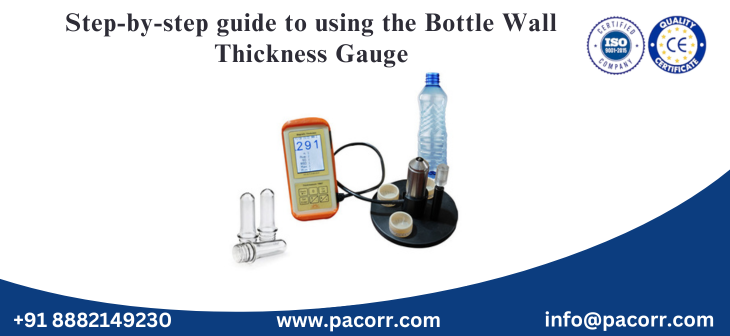
Pacorr’s Bottle Wall Thickness Gauge is an essential instrument designed to measure the thickness of bottles accurately and consistently. In today’s competitive packaging industry, ensuring the quality and safety of bottles particularly in the pharmaceutical, beverage, and cosmetics sectors is crucial. This step-by-step guide to using the Bottle Wall Thickness Gauge will offer comprehensive insights into this vital testing procedure, helping manufacturers ensure product integrity, consumer safety, and regulatory compliance.
Understanding the Importance of Measuring Bottle Wall Thickness
The bottle wall thickness directly influences the durability, strength, and safety of packaging. Thin walls may lead to breakage, leaks, and compromised product safety, whereas overly thick walls result in higher manufacturing costs and inefficient material use. Using a reliable tool like Pacorr’s Bottle Wall Thickness Gauge helps maintain the optimal thickness, leading to cost efficiency and enhanced product safety.
Step-by-Step Guide to Using the Bottle Wall Thickness Gauge
Step 1: Prepare the Instrument
Begin by carefully unpacking Pacorr’s Bottle Wall Thickness Gauge. Ensure the device is clean and free from dust and debris. Perform a preliminary inspection of the gauge to confirm there are no signs of physical damage or malfunction.
Step 2: Calibration
Proper calibration is essential to ensure accurate readings. Use calibration blocks provided or recommended by Pacorr to calibrate the gauge. Adjust the gauge settings until the readings match the known thickness values on the calibration block.
Step 3: Select the Right Probe
Choose the correct probe attachment for your testing needs. Different probes are suitable for various bottle materials and thickness ranges. Ensure the selected probe is securely fitted to the gauge for optimal precision.
Step 4: Positioning the Bottle
Place the bottle securely in the testing position. It is crucial to ensure the bottle is stable and stationary during measurement to avoid inaccurate readings. The gauge must make full and firm contact with the bottle surface without excessive pressure.
Step 5: Conduct the Measurement
Carefully position the gauge probe on the designated area of the bottle wall. Activate the gauge and hold it steadily in place. Allow the gauge to stabilize its reading, typically indicated by a digital display or analog pointer stabilization.
Step 6: Record the Results
Document each measurement clearly and systematically. Take multiple measurements at different points around the bottle to ensure consistency and reliability in your data. This comprehensive approach helps identify variations and potential weaknesses in bottle wall thickness.
Step 7: Analyze the Data
Examine the recorded data closely, comparing the results against industry standards and manufacturing specifications. Identify any discrepancies or deviations that might affect product quality. Consistent analysis will ensure continuous improvement in the production process.
Step 8: Maintenance and Storage
Proper maintenance of Pacorr’s Bottle Wall Thickness Gauge ensures longevity and accuracy. Regularly clean the gauge and probes, store it securely in its designated protective case, and perform routine calibrations.
Key Features of Pacorr’s Bottle Wall Thickness Gauge
- High Precision Measurement: Ensures accuracy within microns, critical for quality assurance.
- User-Friendly Interface: Simple to operate, reducing the possibility of human error.
- Durable Build Quality: Robust construction designed for frequent industrial use.
- Versatile Applications: Suitable for various bottle types including glass, plastic, and aluminum.
Benefits of Using the Bottle Wall Thickness Gauge
- Enhanced Product Safety: Ensures bottles meet safety standards, preventing leaks and breakage.
- Cost Efficiency: Optimal thickness management leads to material savings.
- Regulatory Compliance: Helps manufacturers adhere to strict industry regulations and quality standards.
- Improved Quality Control: Reliable, consistent measurements enable high-quality production outcomes.
Common Applications of Bottle Wall Thickness Measurement
Bottle Wall Thickness Gauges are extensively used across industries such as:
- Pharmaceuticals: Ensuring stringent safety and quality standards.
- Food and Beverage: Preventing spoilage and maintaining product integrity.
- Cosmetics: Ensuring packaging durability and aesthetic consistency.
Troubleshooting Common Issues
- Erratic Readings: Usually resolved by recalibrating the gauge and verifying probe contact.
- Inconsistent Results: Ensure the probe and bottle surface are clean and undamaged.
- Device Malfunction: Regular maintenance and immediate servicing of noticeable faults prevent downtime.
Ensuring Reliability with Pacorr
Pacorr, known for precision and reliability in material testing equipment, ensures manufacturers can confidently measure and manage their bottle production quality. Their Bottle Wall Thickness Gauge exemplifies Pacorr’s commitment to quality assurance, regulatory compliance, and consumer safety.
In conclusion, adhering to this step-by-step guide to using the Bottle Wall Thickness Gauge ensures precise, reliable, and repeatable measurement outcomes. By consistently applying these procedures, manufacturers can significantly enhance product quality, reduce costs, and maintain compliance with essential industry standards. Pacorr’s advanced testing solutions empower businesses to produce safe, durable, and high-quality bottles, strengthening their market reputation and consumer trust.
Recent Blogs
Enhance your understanding of testing and precise quality control indistinct applications with our
knowledge based articles coming from top editors of industry leaders.
Thanks to Pacorr Testing instruments, we have all the required quality testing instruments that have helped us to ensure the best quality delivered to our clients.

Danish
Fair Exports Pvt. Ltd.
