
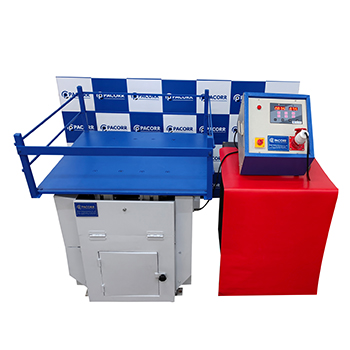

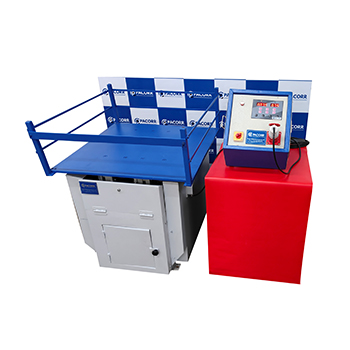
Pacorr’s Vibration Table for Packaging Testing is designed to evaluate the ability of packaged products to withstand repetitive vibration during transportation and handling. It helps manufacturers identify packaging weaknesses that may cause product movement, abrasion, leakage, loosening of components or damage during distribution. The machine tests the complete packaging system, including the outer carton, product, cushioning, partitions, closures and internal supports. This allows packaging engineers and quality-control teams to assess whether the package can protect its contents throughout storage and transportation.
- Shipping Area: All over the world
- Model: PCVT-1
- Brand: Pacorr
- Availability: In Stock


What Is a Packaging Vibration Table?
A packaging vibration table is a laboratory testing machine that generates controlled repetitive movement beneath a packed product. It helps simulate the vibration effects that packages may experience inside trucks, railway containers and other transportation systems. During testing, the packed sample is placed on the platform and exposed to vibration for a specified period. After the test, both the package and product are inspected for damage, displacement or functional failure.
The Pacorr PCVT-1 is suitable for testing:
- Corrugated shipping boxes
- Consumer-product packaging
- Bottles and containers
- Electrical and electronic products
- Automotive components
- Pharmaceutical packaging
- Household appliances
- E-commerce packages
- Industrial components
Why Is Vibration Testing Important?
A package that appears strong under normal conditions may fail after continuous movement during transportation. Repeated vibration can gradually affect the product as well as the packaging materials.
A packaging vibration test can help detect:
- Product movement inside the box
- Cushioning displacement or compression
- Scuffing and surface abrasion
- Loosening of caps, screws or fasteners
- Leakage from bottles and containers
- Damage to delicate components
- Failure of dividers or internal supports
- Carton deformation
- Opening of seals or closures
- Functional failure of the packed product
By identifying these problems before dispatch, manufacturers can improve packaging design and reduce product returns, customer complaints and transit damage.
Key Features of Pacorr Vibration Table
Adjustable Vibration Frequency
The vibration frequency can be adjusted between 5 and 7 Hz, allowing the operator to select the required test condition.
Digital Frequency Display
The machine is equipped with a digital display for monitoring vibration frequency during testing.
Long-Duration Timer
Its digital timer can be set from 0 to 99 hours, making it suitable for both short and extended vibration tests.
50 kg Load Capacity
The platform can test packaged products weighing up to 50 kg.
Spacious Testing Platform
The 800 × 800 mm platform accommodates a wide range of boxes, cartons and packaged products.
Protective Guard Railing
A 300 mm guard railing helps control excessive movement of the sample during operation.
Separate Control Panel
The independently positioned control panel makes parameter setting and machine operation convenient for the user.
How Does the Vibration Table Work?
The packed product is placed on the testing platform in its normal shipping position. The operator sets the required vibration frequency and test duration through the control panel.
Once the machine starts, the platform creates repetitive movement that transfers vibration to the package and its contents. This movement helps reveal weaknesses in the outer box, cushioning, closures and product arrangement.
After completing the selected test duration, the package is inspected for:
- Visible carton damage
- Product displacement
- Cushioning failure
- Leakage
- Loose components
- Surface scratches
- Broken parts
- Functional failure
The test result is generally recorded as pass or fail according to predefined acceptance criteria.
Packaging Vibration Test Procedure
- Prepare the product in its actual shipping package.
- Record the package dimensions, weight and initial condition.
- Place the package correctly on the testing platform.
- Set the required vibration frequency and test duration.
- Start the machine and observe the sample safely.
- Allow the machine to complete the selected test cycle.
- Inspect the package and product after testing.
- Record damage, movement, leakage or functional changes.
- Compare the result with the defined acceptance criteria.
The positioning and restraint of the package should follow the selected testing procedure. Unnecessary clamping may affect the test result.
Applications of the Vibration Test Machine
Pacorr’s Vibration Table is commonly used in:
Packaging Industry
To evaluate corrugated boxes, cushioning materials, partitions and protective packaging designs.
Electronics Industry
To check whether electronic products and components remain secure during transportation.
Automotive Industry
To test packaged spare parts, assemblies, fittings and mechanical components.
Food and Beverage Industry
To detect cap loosening, bottle movement, leakage and partition failure.
Pharmaceutical Industry
To evaluate secondary and tertiary packaging for movement, carton damage and closure security.
E-Commerce Industry
To test packages intended for courier, warehouse and parcel-delivery environments.
Benefits of Packaging Vibration Testing
Using a Vibration Table helps manufacturers:
- Detect package failure before shipment
- Reduce transportation-related product damage
- Improve cushioning and internal packaging
- Compare different packaging designs
- Reduce product returns and replacement costs
- Improve customer satisfaction
- Maintain consistent packaging quality
- Create documented quality-control procedures
The machine provides more repeatable results than manually shaking or moving a package.
ASTM D999 Vibration Testing
ASTM D999 provides different procedures for vibration testing of filled shipping containers. These tests are used to evaluate how the container, internal packaging, closures and contents respond to repetitive vibration. The appropriate test method, duration, frequency and package positioning must be selected according to the product and packaging design.
A vibration test may also form part of a broader package-testing programme involving:
- Drop testing
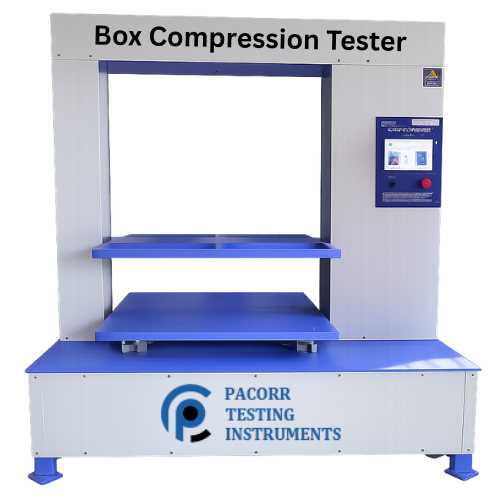
- Box compression testing
- Climatic conditioning
- Impact testing
- Stack-load testing
A vibration test alone does not reproduce every condition experienced during actual transportation, but it provides useful laboratory evidence for packaging evaluation and improvement.
Why Choose Pacorr?
Pacorr Testing Instruments manufactures reliable testing equipment for packaging laboratories, manufacturing units and quality-control departments.
The PCVT-1 Vibration Table offers:
- Digital frequency monitoring
- Adjustable vibration control
- Long-duration testing
- Heavy packaged-product capacity
- User-friendly operation
- Robust construction
- Technical support
- Installation and after-sales assistance
- Domestic and international supply
Frequently Asked Questions
What is a Vibration Table used for?
A Vibration Table is used to evaluate how a packaged product performs under repetitive vibration experienced during transportation and handling.
What is the capacity of the Pacorr Vibration Table?
The PCVT-1 can test packaged products weighing up to 50 kg.
What is the vibration frequency range?
The machine operates within a frequency range of 5–7 Hz.
What is the platform size?
The testing platform measures 800 × 800 mm.
Which packages can be tested?
It can test corrugated boxes, bottles, electronic products, appliances, automotive parts, pharmaceutical packages and other packaged goods within the machine’s size and load capacity.
Can it be used for ASTM D999 testing?
The machine is suitable for applicable fixed-displacement vibration test procedures based on ASTM D999. The complete test setup should follow the selected method.
Does vibration testing guarantee zero transit damage?
No laboratory test can guarantee that a package will never be damaged. However, vibration testing helps identify weaknesses and improve packaging performance before commercial shipment.
How can I get the Vibration Table price?
The price depends on the required capacity, platform size, controls and custom features. Share your package dimensions, gross weight and testing requirements with Pacorr for a suitable quotation.
Request a Quotation
Evaluate your packaging performance before shipment with Pacorr’s Vibration Table for Packaging Testing.
Pacorr Testing Instruments Pvt. Ltd.
Phone: +91-8882149230
Email: info@pacorr.com
Website: www.pacorr.com
Write Your Review
Related Products
Our Clients























By Test Application
Our USP's
Demonstration of Machine
- Try Before You Decide
- Experience Before You Invest
- See It in Action – Free Demo
Global Reach
- Delivering Excellence Worldwide
- Serving Across Borders
- Your Global Supply Partner
On-Site Support
- Support That Comes to You
- On-Ground Assistance, Anywhere
- We Reach Where You Are
Team Strength
- Powered by Expert Minds
- Driven by Skilled Professionals
- Engineering Excellence Team
Manufacturing
- Precision-Driven Manufacturing
- Smart & Automated Production
- Engineered In-House Excellence
