
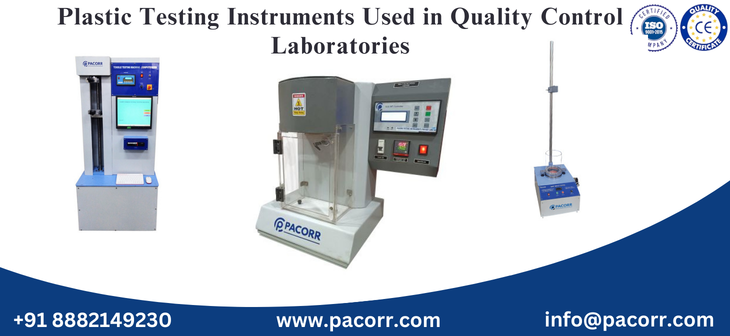
Pacorr stands as a reliable and innovative brand in the field of plastic testing instruments, delivering advanced solutions that help industries maintain strict quality standards. In today’s competitive manufacturing environment, the use of precise laboratory plastic testing equipment is essential to evaluate material properties, ensure product consistency, and meet regulatory requirements. With the right plastic testing equipment, quality control laboratories can identify potential issues at an early stage, reduce production errors, and guarantee that plastic products perform as intended in real-world applications.
Understanding the Role of Plastic Testing in Quality Control
Plastics are used in a wide range of industries, including packaging, automotive, electrical, medical, construction, and consumer goods. Each application demands specific material properties such as strength, flexibility, thermal resistance, and durability. Even small variations in raw materials or processing conditions can significantly affect product quality.
This is where plastic testing instruments play a vital role. Quality control laboratories rely on laboratory plastic testing equipment to assess raw materials, in-process samples, and finished products. These tests ensure that plastics comply with design specifications and industry standards, helping manufacturers deliver reliable and safe products to the market.
Importance of Plastic Testing Instruments in Modern Industries
The growing demand for high-performance plastic products has increased the need for accurate and repeatable testing methods. Plastic testing equipment supports manufacturers in multiple ways:
- Ensuring consistency in raw materials
- Monitoring production quality in real time
- Reducing product failures and recalls
- Meeting national and international compliance standards
- Enhancing customer confidence and brand reputation
Without proper testing, plastic components may fail under mechanical stress, temperature changes, or environmental exposure, leading to serious functional and safety issues.
Types of Plastic Testing Instruments Used in Quality Control Laboratories
Quality control laboratories use a variety of plastic testing instruments to evaluate different physical, mechanical, thermal, and chemical properties of plastic materials. Below are some of the most important instruments used in routine and advanced testing.
A tensile testing machine measures tensile strength, elongation at break, and modulus of elasticity. This test determines how plastic materials behave when subjected to pulling forces. It is crucial for applications where plastics must withstand load and stress without breaking.
The melt flow index tester evaluates the flow behavior of thermoplastic materials under heat and pressure. It helps manufacturers understand the processability of plastic resins during molding or extrusion. Consistent melt flow values indicate uniform material quality.
Impact testing instruments measure the resistance of plastic materials to sudden shocks or impacts. These tests are essential for products such as packaging containers, automotive components, and consumer goods that may experience accidental drops or collisions.
4. Hardness Testing Equipment
Hardness testers determine the resistance of plastic materials to indentation or penetration. This test helps in selecting suitable materials for applications requiring surface durability, scratch resistance, or structural stability.
5. Heat Deflection Temperature Tester
This instrument measures the temperature at which a plastic sample deforms under a specific load. Heat resistance is critical for plastics used in high-temperature environments such as electrical housings, automotive parts, and industrial components.
6. Environmental Stress Cracking Resistance Tester
This test evaluates a plastic material’s ability to resist cracking when exposed to mechanical stress and chemicals. It is particularly important for packaging and chemical storage products where long-term durability is required.
7. Thickness and Density Testing Instruments
These instruments measure uniformity in thickness and density, ensuring consistent material distribution. Accurate measurements help maintain product quality and optimize material usage.
Role of Laboratory Plastic Testing Equipment in Standardization and Compliance
Compliance with international standards such as ASTM, ISO, and BIS is a critical requirement for plastic manufacturers. Laboratory plastic testing equipment ensures that all tests are conducted under controlled and standardized conditions, producing reliable and repeatable results.
Accurate test data helps quality control laboratories generate certification reports, meet audit requirements, and demonstrate product reliability. This level of compliance is essential for entering global markets and maintaining long-term business relationships.
Advantages of Using Advanced Plastic Testing Equipment
Modern plastic testing equipment is designed with automation, digital controls, and data management systems. These advancements offer several benefits, including:
- High precision and repeatability of results
- Faster testing cycles and improved efficiency
- Reduced human error through automation
- Easy data storage, analysis, and reporting
- Improved decision-making in quality assurance
By adopting advanced plastic testing instruments, laboratories can enhance productivity while maintaining accuracy and consistency.
Why Pacorr is a Preferred Choice for Plastic Testing Instruments
Pacorr offers a comprehensive range of plastic testing instruments designed to meet the evolving needs of quality control laboratories. The brand focuses on robust construction, accurate performance, and compliance with international standards. Each piece of laboratory plastic testing equipment is engineered to deliver long-term reliability and ease of operation.
Pacorr also emphasizes customer support, providing technical guidance and customized solutions based on industry requirements. This commitment to quality and service makes Pacorr a trusted partner for manufacturers seeking dependable plastic testing equipment.
Conclusion
Plastic testing instruments are an integral part of quality control laboratories, ensuring that plastic materials meet performance, safety, and regulatory expectations. From mechanical strength and impact resistance to thermal stability and chemical durability, comprehensive testing supports consistent product quality.
By investing in high-quality laboratory plastic testing equipment from Pacorr, manufacturers can strengthen their quality assurance processes, minimize risks, and deliver superior plastic products that meet the demands of modern industries.
Recent Blogs
Enhance your understanding of testing and precise quality control indistinct applications with our
knowledge based articles coming from top editors of industry leaders.

Thanks to Pacorr Testing instruments, we have all the required quality testing instruments that have helped us to ensure the best quality delivered to our clients.

Danish
Fair Exports Pvt. Ltd.
