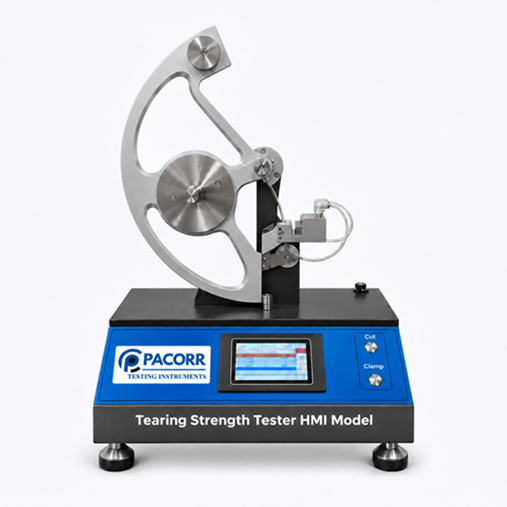
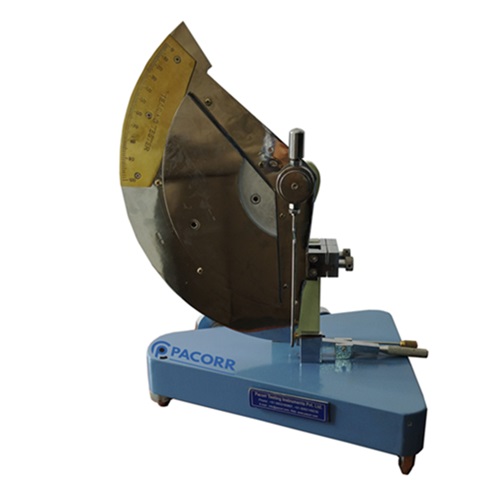
Assess material resistance to tear propagation with the Tearing Strength Tester – HMI Model. Based on the Elmendorf pendulum method, this instrument measures the force needed to continue a tear in a prepared specimen.
Tear resistance is an important consideration when evaluating materials for packaging, converting and textile applications. Understanding how a tear spreads helps quality teams compare samples, investigate changes between batches and assess materials against defined testing requirements.
Rating :5 of 5
Shipping Area: All over the world
Model: PC-TST-HMI
Brand: Pacorr
Availability: In Stock
What Does an Elmendorf Tearing Strength Tester Measure?
An Elmendorf tearing strength tester measures resistance to the propagation of an existing tear. A specimen is prepared with a starting slit and secured between clamps. When the pendulum is released, its movement continues the tear over a specified distance.
The energy absorbed during tearing is used to determine the average tearing force. Results depend on the material, specimen preparation, testing direction and selected method.
Key Features
Editorial note: Confirm the following features for PC-TST-HMI before publishing.
HMI controls: An operator interface for test settings and result viewing.
Pneumatic gripping: Air-operated clamps secure the specimen.
Automatic pendulum release: Supports a controlled test sequence.
Selectable pendulum capacities: Accommodate different tearing-force requirements.
Result calculations: Tear force, per-ply values and averages.
Report handling: PDF and CSV reports with USB transfer.
Quality checks: Configurable acceptance limits and restricted user access.
Technical Specifications
Editorial note: The values below are reference specifications, not verified PC-TST-HMI specifications. Replace or approve them using your product datasheet.
Parameter
Proposed specification — confirm before publishing
Model number
PC-TST-HMI
Testing principle
Elmendorf falling-pendulum method
Operator interface
HMI
Pendulum capacities
1,600 / 3,200 / 6,400 gf
Higher-capacity option
12,800 gf, subject to availability
Specimen gripping
Pneumatic
Starting slit
20 mm
Zero setting
Adjustable
Calibration accessories
Check weights; confirm supplied set
Report formats
PDF and CSV
Data connection
USB
Electrical supply
Confirm voltage, phase and frequency
Compressed-air requirement
Confirm pressure, units and connection size
gf denotes gram-force, a unit of force.
Applications of Elmendorf Tear Testing
Material suitability must be checked against the selected test method and instrument configuration.
Paper testing
Evaluate internal tearing resistance for paper-grade comparison and material quality assessment. Depending on the method, specimens may consist of one sheet or multiple sheets.
Plastic film and thin sheeting
Compare propagation tear resistance in suitable films of comparable thickness. Highly extensible materials require particular care because stretching and changes in tear direction can affect results.
Textile testing
Assess tearing behaviour in suitable woven and other qualifying fabrics. Fabric construction and test direction affect whether the Elmendorf method is appropriate.
How Tear Testing Supports Quality Control
Tear-test results can help your team:
Compare incoming materials against agreed specifications.
Monitor variation between production batches.
Evaluate the effect of material or process changes.
Investigate differences between supplier samples.
Support material selection alongside other relevant strength tests.
For meaningful comparisons, keep specimen preparation, conditioning, material direction and test settings consistent.
Selecting the Right Testing Configuration
Choose the pendulum capacity according to the expected tearing force and the usable measurement range required by the test method.
When requesting a recommendation, provide the material type, thickness or grammage, testing direction and applicable standard. These details help determine the appropriate capacity, specimen preparation and accessories.
Frequently Asked Questions
What is an Elmendorf tearing strength tester used for?
It measures the force needed to continue a tear that has already been started in a specimen. Depending on the method and equipment configuration, applications include paper, suitable plastic films and selected fabrics.
Can one configuration test every material?
No. Material behaviour, specimen geometry, clamp requirements and expected tear force must be assessed before selecting a configuration. Some materials stretch excessively or tear in a way that makes the method unsuitable.
Why does testing direction matter?
Materials can resist tearing differently in different directions. Reporting the specimen direction helps make results interpretable and supports fair comparisons between samples.
How do I choose the pendulum capacity?
Select a capacity that places the expected result within the usable range specified by the applicable method and instrument instructions. Share your sample details when requesting a quotation.
What is the price of the PC-TST-HMI?
Request a quotation for the configuration you require. Include your material details, preferred testing standard and any reporting or accessory requirements so the quotation can specify the appropriate scope of supply.
Standards for Technical Review
Before adding a “Standards Compliance” section, confirm which methods your instrument actually supports.
Standard
Relevant scope
ASTM D689
Internal tearing resistance of paper.
ASTM D1424
Elmendorf tearing strength of suitable fabrics.
ASTM D1922
Propagation tear resistance of plastic film and thin sheeting.
ASTM D1776/D1776M
Textile conditioning practice; it is not a tearing-strength test method.
Request a Quote for PC-TST-HMI
Discuss your tear-testing requirements and request a quotation for the Elmendorf Tearing Strength Tester - HMI Model.
Send your material type, expected tearing-force range and required test method to help identify a suitable configuration.
Button text: Request a Quote
Publication Notes
For publication, add your own product photographs, confirmed datasheet and contact details. Link the page from the relevant product category, and use descriptive image alt text that matches the actual photograph.
Enter the SEO title, meta description and URL slug from the opening comment into the corresponding CMS fields. Remove editorial notes after checking the product details.
Thanks to Pacorr Testing instruments, we have all the required quality testing instruments that have helped us to ensure the best quality delivered to our clients.
D
Danish
Fair Exports Pvt. Ltd.
The extensive range of testing instruments they have to offer, satisfied all my quality testing needs. The most impressive things, I feel, is the comprehensive after-sales support that I received from them.
NJ
Nipun Jain
Fast Pack India
I recently ordered some plastic molding testing instruments from Pacorr and I must say I am amazed by the quality of their devices and the support we got from their team was remarkable. I totally recommend Pacorr instruments for unmatched quality assurance.
BS
Bhaskar Srivastava
Dipty Lal Judge Mal Pvt Ltd
Pacorr has offered us the best range of chemicals and coating testing instruments that have made it extremely easy to take care of our product quality. Thanks Pacorr Testing Instruments.
RD
Rajpal Dhiman
Tasmay Unicoats Private Limited
I purchased a torque tester for my company which is working just perfectly fine since last 6 months. Also, their comprehensive after sales service makes them stand out from others. I will recommend Pacorr for best quality products and excellent customer service.