
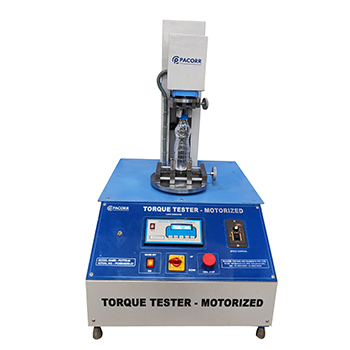
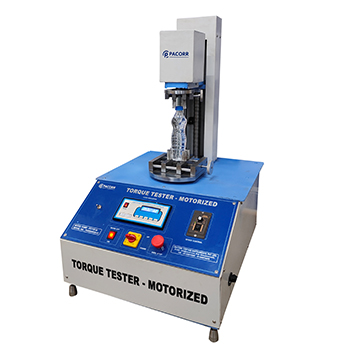
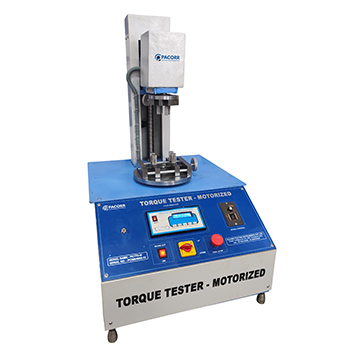
Motorised Bottle Cap Torque Tester measures the turning effort required to open or tighten a threaded closure using motor-driven rotation. It helps packaging teams evaluate cap tightness through a defined testing process, reducing the variation associated with turning each cap by hand. This makes it useful when comparing samples from different production batches, checking capping adjustments or investigating inconsistent opening performance.
The Pacorr PCTTD-M supports clockwise and anticlockwise torque measurement, with a backlit LCD, peak hold and tare functions. Its listed torque capacity is 20 N•m, and customised clamping fixtures can be assessed for specific samples. Designed for compatible bottles, jars and containers, the instrument helps manufacturers collect torque readings for comparison with their approved packaging specifications.
- Shipping Area: All over the world
- Model: PCTTD-M
- Brand: Pacorr
- Availability: In Stock


What Does Motorised Cap Torque Testing Measure?
Cap torque testing measures resistance to rotation at the closure. Two measurements commonly used in packaging evaluation are application torque and removal torque.
Application torque is the turning effort applied while tightening the closure. It helps establish and assess the capping conditions used for a particular container and cap combination.
Removal torque is the turning effort needed to loosen the closure after capping. This measurement is useful for investigating opening difficulty and comparing samples tested after defined storage intervals.
These values should be recorded separately. An opening result does not directly reproduce the original tightening torque because the closure assembly can change after application. For meaningful evaluation, the test record should identify the sample, measurement direction, elapsed time after capping and the procedure followed. A torque value becomes useful when it is connected to these conditions.
Why Use Motorised Rotation?
During manual testing, operators can differ in how quickly they turn a cap, how they grip it and how smoothly they apply effort. Motor-driven rotation reduces reliance on the operator’s hand movement during the measurement. This provides a more structured approach to repeated testing, particularly when a laboratory needs to compare batches or investigate changes in closure performance. The operating speed and available controls should be matched to the intended test procedure when selecting the instrument. Motorised operation still requires careful preparation. The operator must secure the sample, align the closure, select the appropriate measurement settings and follow the prescribed sequence. Consistent mounting and sample conditioning remain essential to obtaining comparable results.
Working Principle
The instrument measures the torque generated as the closure and container rotate relative to one another. The holding arrangement secures the sample, while the motor-driven mechanism produces the rotational movement required for opening or closing. As resistance develops at the closure, the torque sensing system produces a measurement that appears on the digital display. The peak hold function retains the highest registered torque during the measurement cycle.
The required result depends on the test objective. A procedure may focus on the effort needed to initiate opening or on the maximum value recorded during a defined movement. These are not automatically interchangeable, particularly with closures that produce more than one resistance peak.
Correct alignment helps the instrument measure the intended rotational load. Slipping fixtures, distorted containers or an uneven grip can affect the result and should be addressed before testing continues.
Technical Specifications
- Product: Motorised Bottle Cap Torque Tester.
- Model: PCTTD-M.
- Brand: Pacorr.
- Maximum torque capacity: 20 N·m.
- Published accuracy: 0.5% of full-scale deflection.
- Display: Backlit LCD.
- Closure operation: Motorised opening and closing.
- Measurement directions: Clockwise and anticlockwise.
- Listed sample diameter range: 15–200 mm.
- Maximum vertical traverse: 400 mm.
- Measurement units: N·m, lb-in and kg-cm, as listed for the instrument.
- Peak hold: Available.
- Tare function: Available.
- Power supply: 230 V AC.
- Listed instrument dimensions: 32 × 35 × 60 cm.
- Clamping fixtures: Customisation available subject to sample requirements.
The sample diameter range does not establish compatibility with every cap or bottle shape. Cap dimensions, container height, gripping surfaces and fixture clearance should also be checked. Maximum vertical traverse should not be treated as the maximum usable bottle height.
Key Features
- Motor-driven testing: Reduces dependence on manual cap rotation during the measurement.
- Opening and closing evaluation: Supports assessment of closure torque in both operating directions.
- Peak hold facility: Retains the maximum registered value for review and recording.
- Backlit digital display: Provides a readable torque indication during testing.
- Selectable torque units: Helps laboratories work with the units specified in their inspection procedures.
- Tare facility: Supports zero adjustment as required by the instrument’s operating procedure.
- Sample holding arrangement: Secures compatible containers during rotational testing.
- Customised fixture options: Allows assessment of holding solutions for samples that require a different gripping arrangement.
Selecting the Right Fixtures for Your Samples
Fixture suitability is as important as torque capacity. The holding system must secure the container and engage the closure without introducing avoidable movement or damage. A thin-walled plastic bottle may deform if excessive clamping pressure is applied. A smooth or tapered container can be difficult to hold securely. A ribbed, unusually shaped or short closure may need a gripping arrangement different from that used for a standard screw cap.
Before choosing the configuration, provide:
- Container material, shape and overall dimensions.
- Bottle body diameter and height.
- Cap diameter, height and external profile.
- Expected opening and closing torque.
- Photographs or physical samples.
- Details of tamper-evident or child-resistant mechanisms.
- Required test method and daily testing volume.
A sample trial helps establish whether the container remains secure, the closure is accessible and the arrangement can support the intended procedure.
How to Use the Motorised Bottle Cap Torque Tester
Follow the supplied operating manual and your approved laboratory method. A typical testing workflow includes the following steps:
- Identify and prepare the sample. Record the container type, closure details, batch number and test objective. Maintain the conditioning period required by your procedure.
- Check instrument readiness. Confirm calibration status, fixture suitability and that the expected torque falls within the instrument’s measurement capability.
- Mount the sample. Secure the container without deforming it. Align the closure with the rotational axis and engage the appropriate gripping fixture.
- Prepare the measurement. Select the required units and direction. Complete zeroing or taring at the stage specified in the operating instructions.
- Run the test. Start the motor-driven operation using the settings required by the procedure. Observe the sample for slippage or abnormal movement.
- Record the specified result. Note the relevant torque reading and any observations. Use peak hold only where the method calls for the maximum registered value.
- Compare and report. Assess the result against the approved acceptance limits for that packaging system. Continue with the required number of samples.
For first-opening evaluations, use fresh samples unless the method specifies otherwise. Opening and reclosing the same bottle changes its test history.
Understanding Torque Results
A high reading should not automatically be interpreted as good closure performance. Packaging needs an opening experience and sealing performance appropriate to its intended use. An unusually high removal result can prompt investigation of capping settings, closure components or storage conditions. A low result may require checking the same factors from a different direction. In either case, the result should be compared with established limits for the specific packaging design. Avoid adopting one torque limit for every bottle. Cap diameter, thread design, liner construction and material combination can differ substantially between packages. Torque testing also does not independently establish that a container is leakproof. Where leakage is a concern, evaluate the package using a suitable leak or seal integrity test alongside torque measurement.
Factors That Affect Comparability
Even with motorised operation, differences in sample preparation can make results difficult to compare.
- Time after capping: Test samples at defined intervals. A measurement taken immediately after closure application should be distinguished from one taken after storage.
- Sample temperature: Keep conditioning consistent with the selected procedure and record relevant conditions.
- Rotational settings: Use the same specified settings when comparing samples and confirm that the instrument configuration supports them.
- Mounting and alignment: Maintain a consistent gripping method. Investigate slipping, leaning or visible container deformation.
- Previous handling: Record whether a closure has already been opened, retightened or otherwise disturbed.
- Measurement units: Use a consistent reporting unit and clearly identify any conversions.
These controls help separate changes in the packaging from changes in the test process.
Applications
The instrument can support testing of compatible threaded packaging used in:
- Beverages: Comparing removal torque between production samples.
- Pharmaceutical packaging: Evaluating closure torque under documented inspection procedures.
- Cosmetics and personal care: Investigating opening consistency in suitable bottles and jars.
- Food packaging: Comparing cap and container combinations during packaging development.
- Household and chemical products: Checking closure torque for compatible screw-capped containers.
- Packaging development laboratories: Assessing changes in caps, liners, containers or capping conditions.
Special closures should be assessed individually. A mechanism requiring simultaneous downward force and rotation may need additional equipment or a dedicated fixture.
Motorised, Digital and Computerised Models
These descriptions refer to different aspects of the testing system. A digital display provides an electronic torque reading. Motorised operation supplies rotational movement through a powered mechanism. Computerised functionality concerns software, data transfer or analysis. When selecting equipment, check the actual combination of functions supplied. A motorised tester does not automatically include computer connectivity, graphical reports, programmable stop limits or electronic record controls. For the PCTTD-M, discuss your required speed, measurement resolution, stopping behaviour and reporting arrangements with Pacorr before finalising the configuration.
Test Methods and Calibration
Select the test method according to the closure type, measurement objective and customer requirements. The procedure should define sample conditioning, operating conditions, the result to report and the acceptance criteria. Where a particular standard is required, share its designation and edition during the enquiry. Suitability should be assessed against the complete method, including fixture and operating requirements. Calibration should cover the relevant measurement range and directions. Display resolution, accuracy and repeatability describe different aspects of performance; each should be considered when selecting an instrument for a narrow acceptance range.
Why Choose Pacorr?
Pacorr offers the PCTTD-M for manufacturers seeking motor-driven closure torque measurement with digital indication. The instrument combines opening and closing evaluation with peak hold, tare and options for customised clamping fixtures.
A useful selection discussion starts with your actual packaging. Share your samples, expected torque range and inspection procedure so that fixture suitability and the proposed configuration can be evaluated together. A demonstration can help your team understand sample loading, operation and result recording before purchase.
Frequently Asked Questions
Is this tester fully automatic?
The opening and closing movement is motorised. Sample loading, alignment, test preparation and other tasks depend on the supplied configuration and operating procedure.
Can it measure both opening and closing torque?
The PCTTD-M is listed for motorised opening and closing, with clockwise and anticlockwise torque measurement. Use the appropriate fixture and procedure for each test.
Does the 15–200 mm range refer to every compatible cap size?
It is the published sample diameter range. Cap-gripping compatibility must be checked separately, together with bottle height, geometry and fixture clearance.
Does peak hold always show the first opening peak?
Peak hold retains the maximum registered torque. If the method requires a specific event, such as the initial opening peak, confirm that the instrument can identify and report that event.
Can results be exported to a computer?
Confirm connectivity and software functions for the configuration being quoted. Motorised operation alone does not establish data export capability.
How can I decide whether a cap is too tight?
Compare the measured result with the approved limits for the particular container, closure and test method. There is no single suitable value for all packages.
Can this instrument test child-resistant closures?
Compatibility depends on the opening mechanism. Closures requiring combined axial force and rotation need a specific assessment of equipment and fixture requirements.
What determines the price?
The quotation depends on the supplied configuration, fixture requirements and requested accessories or documentation. Sharing sample details helps Pacorr prepare an appropriate offer.
Request a Demonstration or Quotation
Looking for a Motorised Bottle Cap Torque Tester for your packaging line or laboratory? Share your bottle dimensions, cap details, expected torque and testing requirements with Pacorr.
Call: +91-8882149230
Email: info@pacorr.com
Website: www.pacorr.com
Write Your Review
Get a Quote
Share your requirement and our team will reply shortly.
+91-8882149230
Related Products
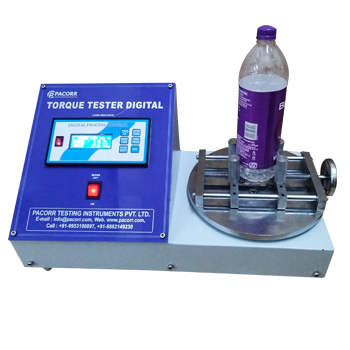
Our Clients























Explore Related Tests
Find more testing instruments by test standard, application and industry.
Our USP's
Demonstration of Machine
- Try Before You Decide
- Experience Before You Invest
- See It in Action – Free Demo
Global Reach
- Delivering Excellence Worldwide
- Serving Across Borders
- Your Global Supply Partner
On-Site Support
- Support That Comes to You
- On-Ground Assistance, Anywhere
- We Reach Where You Are
Team Strength
- Powered by Expert Minds
- Driven by Skilled Professionals
- Engineering Excellence Team
Manufacturing
- Precision-Driven Manufacturing
- Smart & Automated Production
- Engineered In-House Excellence
