
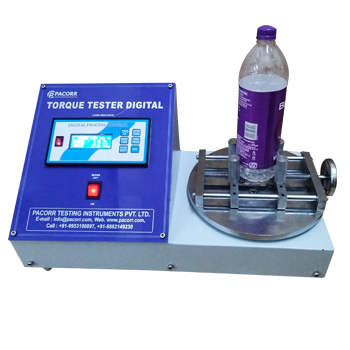
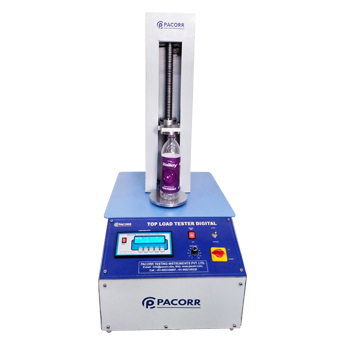
The Digital Bottle Cap Torque Tester measures the turning effort required to tighten or loosen a bottle cap. It gives packaging teams a numerical reading for checking closure tightness against an approved specification. This helps manufacturers investigate difficult-to-open bottles, inconsistent capping and differences between packaging batches.
- Shipping Area: All over the world
- Model: PCTTD-1
- Brand: Pacorr
- Availability: In Stock


Pacorr’s digital model combines manual cap rotation with an electronic torque display. The operator secures the container, turns the closure and observes the measured torque. It is intended for sample testing in quality-control laboratories and packaging facilities, where teams need to evaluate bottle-and-cap combinations and record results for comparison.
Technical Specifications
- Model: PCTTD-1
- Torque capacity: 10 N·m
- Sample holding diameter: 20–200 mm
- Accuracy: 0.5% of full-scale deflection, as specified in the brochure
- Display: Backlit LCD
- Measurement units: N·m, lbf·in and kgf·cm
- Measurement directions: Clockwise and anticlockwise
- Power supply: 230 VAC
- Peak hold: Available
- Tare function: Available
- Torque limit settings: Upper and lower limits
The sample holding range refers to the container held by the fixture. Suitability should also be checked against container shape, rigidity and closure accessibility.
Key Features
- Digital readout for observing measured torque.
- Peak hold for retaining the maximum registered value.
- Tare facility for zeroing before measurement.
- Bidirectional measurement for clockwise and anticlockwise testing.
- Selectable units for recording results in the required format.
- Upper and lower torque settings for defined test requirements.
- Adjustable holding arrangement for compatible bottles and jars.
What Do Opening and Closing Torque Mean?
Closing torque, also called application torque, is the turning effort applied while tightening a closure. Opening torque, or removal torque, is the turning effort needed to loosen it. These values should be recorded separately. A removal reading taken from a finished package should not automatically be treated as the torque originally applied by the capping machine. For useful comparisons, identify the measurement being performed and the conditions under which it was taken. A test record should distinguish between freshly capped samples and samples tested after a defined storage interval.
How Does a Digital Bottle Cap Torque Tester Work?
The holding arrangement keeps the container secure while the operator rotates its cap. The measuring system detects the resulting torque and presents the value on the digital display. Manual operation makes the operator’s technique part of the measurement process. A consistent grip, smooth rotation and stable sample positioning help make results more comparable. Sudden movement, bottle slippage or inconsistent handling can make readings difficult to interpret.
“Digital” describes the measurement and display system. It does not, by itself, mean that the instrument rotates the closure automatically.
How to Perform a Bottle Cap Torque Test
The following is a general workflow. The instrument manual and the selected test method should define the final procedure.
- Identify the sample. Record the bottle type, closure type, batch number and relevant preparation details.
- Define the measurement. Specify whether the test concerns application torque or removal torque.
- Check the instrument. Confirm calibration status, suitable capacity and the required measurement unit.
- Position the container. Secure it without allowing movement or excessive deformation.
- Prepare the reading. Zero the instrument according to its operating instructions and select the required measurement function.
- Rotate the closure. Apply a smooth, consistent turning action according to the test procedure.
- Record the result. Include the torque value, unit, test direction and any unusual sample behaviour.
- Assess the sample group. Compare results with approved limits and investigate inconsistent readings.
Do not assume that repeatedly opening and closing one bottle represents a set of independent production samples. Use the sampling and retesting rules defined in your procedure.
Understanding the Test Results
A torque value becomes useful when it is compared with a defined packaging requirement. There is no single acceptable reading for every bottle and closure. The acceptance range should come from the relevant packaging specification and validation work. When reviewing a result, consider whether the sample, preparation method and testing conditions match those used to establish that range.
For example, when comparing two closure batches, use the same bottle specification, sample preparation and testing interval. Record individual measurements so that variation remains visible instead of relying only on an average. Unexpected results should prompt an investigation of both the packaging and the test setup. Check sample identification, container holding, operator technique and instrument condition before drawing conclusions.
Does Torque Testing Confirm Leak Tightness?
Torque measurement supports closure quality control, but a torque reading alone does not establish that a package is leak-tight. Where leakage performance matters, include an appropriate seal-integrity or leakage test in the packaging evaluation. Keeping the two measurements separate helps teams understand whether a concern involves closure tightness, sealing performance or both.
Bottle and Closure Compatibility
Sample selection should consider more than bottle diameter. The holding arrangement must secure the container, and the operator must be able to access and rotate the closure correctly.
Before selecting the instrument, provide:
- Container body diameter and overall height.
- Bottle or jar material.
- Cap diameter and closure design.
- Expected torque range.
- Photographs or physical samples.
- Details of any unusual opening action.
Do not assume that every closure can be evaluated using the same setup. A hinged lid’s lifting action, for example, is different from unscrewing a threaded closure. Special closure designs should be reviewed for fixture and procedure suitability.
Test Methods and Calibration
Use a documented test procedure appropriate to the packaging being evaluated. It should identify sample preparation, measurement direction, testing interval, operating technique and reporting requirements. ASTM D3474 addresses the calibration and use of torque meters in packaging applications. It should be understood as a reference for measurement practice, rather than a universal pass-or-fail requirement for bottle seals. When requesting a quotation, specify any required standard and edition. Confirm that the proposed instrument, accessories and calibration documentation meet the intended method before purchase.
Choosing Between Digital, Motorised and Computerised Models
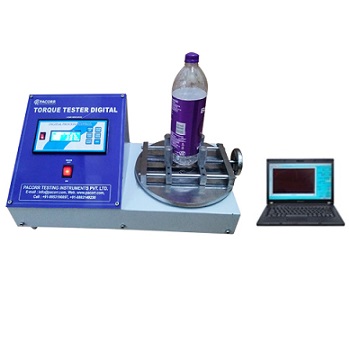
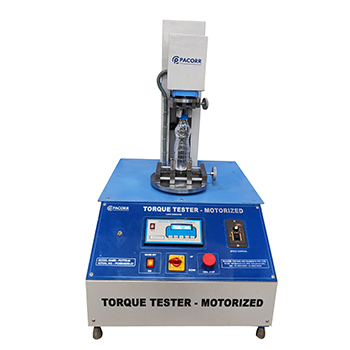
Start with the testing task and the information your team needs to record. A manually operated digital instrument may suit routine sample checks where the operator turns the cap and records the displayed result. For work requiring controlled powered rotation, evaluate a motorised configuration and its operating range. If electronic records are required, assess the computerised model’s actual software functions. Confirm data capture, export formats and reporting capabilities individually. A digital display does not automatically include computer connectivity or report generation.
Explore the Bottle Cap Torque Tester range to compare available configurations against your sample and documentation requirements.
Digital Bottle Cap Torque Tester Price and Enquiry
Request a quotation based on your bottle dimensions, closure design, expected torque and required documentation. Include any special fixture requirements so the proposed configuration can be assessed against the actual sample. For a quotation or demonstration enquiry, contact Pacorr Testing Instruments:
Website: www.pacorr.com
Email: info@pacorr.com
Phone: +91-8882149230
Frequently Asked Questions
Is a digital bottle cap torque tester automatic?
This model uses manual cap rotation with a digital reading. Automatic rotation requires a suitable motorised configuration.
What is the purpose of peak hold?
Peak hold retains the maximum registered torque during the measurement. The test procedure should specify which reading needs to be reported.
Is accuracy the same as resolution?
No. Accuracy concerns agreement with a reference value. Resolution is the smallest increment the instrument can display. Check both when selecting equipment for a particular measurement range.
Can the instrument test bottles and jars?
Compatible bottles and jars can be evaluated when their dimensions, rigidity and closure design suit the holding arrangement and test procedure. Unusual samples should be assessed before purchase.
Can test results be transferred to a computer?
Confirm connectivity and export functions for the supplied configuration. Do not assume these features are included because the instrument has a digital display.
How do I decide whether a cap is too tight?
Compare the measured result with the approved limit for that packaging system and test method. A value that is suitable for one closure may be unsuitable for another.
What details should I share for model selection?
Provide container dimensions, cap design, expected torque, testing volume, applicable method and reporting requirements. A physical sample can help establish fixture suitability.
Write Your Review
Get a Quote
Share your requirement and our team will reply shortly.
+91-8882149230
Related Products
Our Clients























Explore Related Tests
Find more testing instruments by test standard, application and industry.
By Test Standard
By Test Application
Our USP's
Demonstration of Machine
- Try Before You Decide
- Experience Before You Invest
- See It in Action – Free Demo
Global Reach
- Delivering Excellence Worldwide
- Serving Across Borders
- Your Global Supply Partner
On-Site Support
- Support That Comes to You
- On-Ground Assistance, Anywhere
- We Reach Where You Are
Team Strength
- Powered by Expert Minds
- Driven by Skilled Professionals
- Engineering Excellence Team
Manufacturing
- Precision-Driven Manufacturing
- Smart & Automated Production
- Engineered In-House Excellence
