
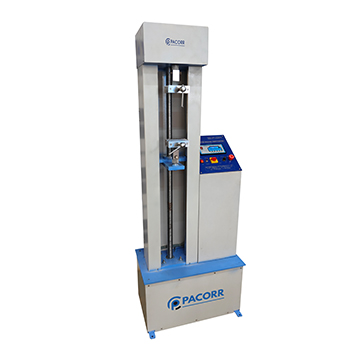

Tensile Testing Machine for Cement HDPE Bags is essential in ensuring the durability and strength of these packaging materials. By applying controlled tensile forces, these machines measure critical parameters such as tensile strength, yield strength, and elongation, which are crucial for determining how well the bags can withstand the rigors of handling, transportation, and storage. For HDPE bags used in cement packaging, it is vital to ensure they do not tear or fail under the weight and rough handling conditions typically encountered in the construction industry. Adhering to standardized testing procedures ensures that these bags meet industry standards, providing reliability and safety for both manufacturers and end-users.
- Shipping Area: All over the world
- Model: PCTTM-CHB
- Brand: Pacorr
- Availability: In Stock


Utilizing a Tensile Testing Machine for Cement HDPE Bags allows manufacturers to conduct thorough quality assessments, ensuring the materials meet the required performance standards. This testing process is critical as it helps identify the load-bearing capacity and elongation limits of the bags, thus preventing product loss and damage during transit. By understanding the mechanical properties through tensile testing, manufacturers can optimize the material composition and production processes, leading to stronger, more durable bags. This not only enhances customer satisfaction by providing reliable packaging solutions but also helps in maintaining a competitive edge in the market.
Tensile testing is a crucial process for evaluating the mechanical properties of materials, especially in the context of HDPE (High-Density Polyethylene) bags used for cement packaging. These tests help determine the durability, strength, and overall quality of the bags, ensuring they can withstand the stresses of handling and transportation.
What is Tensile Testing?
Tensile testing involves applying a pulling force to a material sample until it breaks. This process helps measure the material's tensile strength, yield strength, elongation, and other important mechanical properties. The key components of a tensile testing machine include:
- Load Cell: Measures the force applied to the material.
- Extensometer: Measures the elongation or change in length of the material.
- Grips: Hold the material sample securely during the test.
Importance of Tensile Testing for HDPE Bags
Load and Elongation
The load is the amount of force applied to the material, while elongation is the change in length that occurs due to this force. Measuring these parameters helps determine how much force the HDPE bags can handle before they start to deform or break. This is crucial for ensuring the bags can carry heavy loads of cement without tearing.
Strain and Stress
Strain is the deformation of the material relative to its original length, and stress is the force applied per unit area. The stress-strain curve obtained from tensile testing provides valuable insights into the material's elasticity, ductility, and toughness. For HDPE bags, understanding these properties ensures they maintain integrity during use.
Applications in Industry
Packaging Industry
In the packaging industry, tensile testing is vital for ensuring that HDPE bags used for cement are strong and durable. These bags must withstand significant stress during handling, transportation, and storage. Tensile testing helps manufacturers meet quality standards and customer expectations.
Construction Industry
In the construction industry, materials need to be reliable and robust. Tensile testing machines help evaluate the strength of various materials, including HDPE bags, which are commonly used to store and transport construction materials like cement. Ensuring these bags are of high quality is essential for maintaining safety and efficiency on construction sites.
Testing Standards and Procedures
Tensile testing of HDPE bags typically follows standards such as ASTM and ISO to ensure consistency and reliability of results. The process involves preparing the test specimen, mounting it in the machine, applying the load, and measuring the resulting elongation and force. These measurements are then used to calculate the material's mechanical properties.
Steps in Tensile Testing
- Preparation: The material sample is cut to a specific size and shape.
- Mounting: The sample is placed in the machine's grips.
- Loading: A controlled pulling force is applied.
- Measurement: The load and elongation are continuously measured.
- Analysis: The data is used to generate stress-strain curves and calculate properties like tensile strength and yield strength.
Tensile testing machines play a critical role in ensuring the quality and performance of HDPE bags used in cement packaging. By understanding the mechanical properties of these materials, manufacturers can produce bags that are strong, durable, and capable of withstanding the demands of their intended use. Investing in reliable tensile testing equipment and adhering to standard testing procedures helps maintain high quality and safety standards in both the packaging and construction industries.
| Feature | Details |
| Purpose | Evaluates tensile strength of cement HDPE bags |
| Key Parameters | Load, elongation, strain, tensile strength, yield strength |
| Industry Applications | Packaging, construction, material science, quality control |
| Testing Standards | ASTM, ISO |
| Benefits | Ensures durability, quality, and performance of HDPE bags |
Write Your Review
Get a Quote
Share your requirement and our team will reply shortly.
+91-8882149230
Our Clients
























Explore Related Tests
Find more testing instruments by test standard, application and industry.
By Test Standard
Our USP's
Demonstration of Machine
- Try Before You Decide
- Experience Before You Invest
- See It in Action – Free Demo
Global Reach
- Delivering Excellence Worldwide
- Serving Across Borders
- Your Global Supply Partner
On-Site Support
- Support That Comes to You
- On-Ground Assistance, Anywhere
- We Reach Where You Are
Team Strength
- Powered by Expert Minds
- Driven by Skilled Professionals
- Engineering Excellence Team
Manufacturing
- Precision-Driven Manufacturing
- Smart & Automated Production
- Engineered In-House Excellence
