
.jpg)
.jpg)
.jpg)
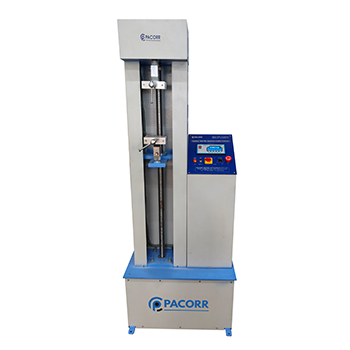
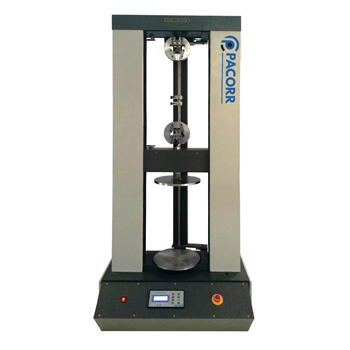
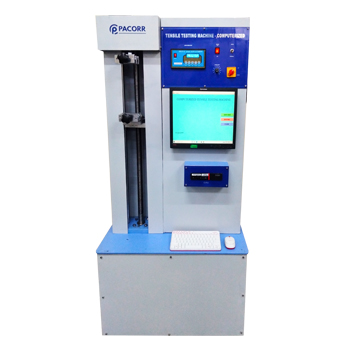
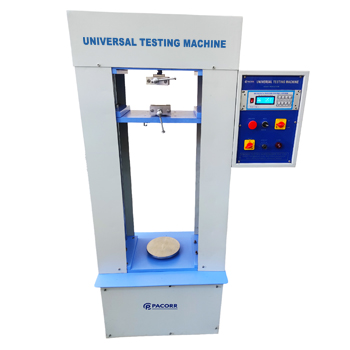
The Universal Tensile Testing Machine (UTM) is designed for controlled evaluation of a material’s behaviour under tensile and, with suitable fixtures, compression or related mechanical loading. It records the applied force and specimen extension to help determine tensile strength, maximum load, elongation, yield behaviour and other performance characteristics. Suitable for quality control, product development and research laboratories, the machine supports repeatable testing of plastics, rubber, films, textiles, paper, packaging materials, wires and selected engineering components.
- Shipping Area: All over the world
- Model: PCUTM-5000
- Brand: Pacorr
- Availability: In Stock


What is a Universal Tensile Testing Machine?
A Universal Tensile Testing Machine (UTM) is a precision instrument used to measure how a specimen responds when subjected to a gradually increasing mechanical force. The sample is secured between purpose-selected grips, and the movable crosshead travels at a controlled speed until the required extension, load limit or break point is reached.
A load cell measures force, while the displacement system tracks crosshead movement; an extensometer may be used where direct strain measurement is required. From the recorded load and dimensional data, the operator can evaluate maximum force, tensile strength, elongation, yield point, modulus and break characteristics, depending on the material and test method.
Its universal design allows the same test frame to perform different tests by changing the grips, fixtures, load cell and software settings. Correct machine capacity and accessories must therefore be selected according to the specimen and applicable standard.
Key Features
Pacorr’s Universal Tensile Testing Machine combines a rigid test frame with controlled crosshead movement and sensitive force measurement. Its configurable design supports different load cells, grips and fixtures for varied specimen types. Digital controls simplify parameter setting, while compatible software can display load-versus-extension data and store test results. Safety features such as travel limits and overload protection help protect the machine and specimen. Accurate specimen alignment, adjustable test speed and repeatable grip positioning support dependable comparison between batches. The system can be configured for tensile, compression, peel, adhesion or related tests, subject to the selected accessories and method.
Applications
The Universal Tensile Testing Machine is used to evaluate raw materials, finished products and bonded assemblies during incoming inspection, process control and product development. Typical applications include tensile testing of plastic mouldings, films, rubber strips, textiles, paper, woven sacks, wires and laminates. With suitable fixtures, it can also support compression testing of selected components, peel or seal-strength evaluation of packaging and pull-off or adhesion studies. The equipment is useful for comparative material selection, supplier qualification, failure analysis and verification of production consistency.
Benefits of Using a Universal Tensile Testing Machine
Using a Universal Tensile Testing Machine converts material failure into measurable engineering data rather than visual judgement alone. Manufacturers can compare batches, validate supplier materials, investigate premature breakage and confirm whether a product meets an internal specification or recognised test method.
Controlled speed, calibrated force measurement and consistent specimen gripping improve repeatability between tests. Results such as maximum load, tensile strength, elongation and yield behaviour help engineers balance strength, flexibility and material consumption during product development.
Digital result storage also improves traceability and makes trend analysis easier. Because fixtures and capacities can be changed, one correctly configured UTM can support several quality-control requirements without purchasing a separate machine for every mechanical test.
Working Principle
The specimen is prepared to the dimensions required by the selected test method and clamped centrally between the upper and lower grips. During a tensile test, the crosshead separates the grips at a programmed speed, creating an increasing axial load.
The load cell continuously converts the applied force into an electrical signal, while the machine records crosshead displacement or strain from an extensometer. Software uses these values, together with specimen width, thickness or cross-sectional area, to generate load-extension or stress-strain results.
The test ends when the specimen breaks, a preset force or travel limit is reached, or the operator stops the cycle. Reliable results depend on correct alignment, gripping, specimen conditioning and machine calibration.
How to Use a Universal Tensile Testing Machine
Prepare and condition the specimen according to the applicable standard, then measure its width, thickness or cross-sectional area. Select a load cell and grips appropriate for the expected force and material surface.
Install the specimen centrally, keeping the gauge section straight and free from pre-tension unless the method requires it. Enter the gauge length, specimen dimensions, test speed and stopping condition in the controller or software. Zero the force and displacement readings before starting the test.
After completion, review the test curve and recorded values. Reject invalid grip-area failures where required, save the result and remove specimen fragments safely. Regular verification and calibration should be maintained.
Why Choose Pacorr Universal Tensile Testing Machine?
Pacorr provides Universal Tensile Testing Machines for laboratories that require practical operation, configurable testing and dependable material-strength data. The machine can be supplied with load capacity, grips, fixtures, controls and software selected around the customer’s specimen and testing requirement, helping avoid an oversized or unsuitable configuration.
A rigid testing frame, controlled movement and digital result handling support routine quality checks as well as research and product-development work. Pacorr also assists with application understanding, installation, operating guidance and after-sales support.
For correct machine selection, users should share the material type, specimen dimensions, expected breaking load, required test speed and applicable testing standard.
Standards and Compliance
Depending on its capacity, grips, extensometer and software configuration, the Universal Tensile Testing Machine can be used for methods based on ASTM D638 for plastics, ASTM D882 for thin plastic films and ISO 527 for plastics and composites.
Other material-specific ASTM, ISO or BIS methods may also be supported. Compliance depends on using the prescribed specimen, conditioning procedure, test speed, gauge length, calculations and calibrated accessories.
Industries Served
- Plastic and polymer manufacturing
- Flexible packaging and laminates
- Rubber and elastomer products
- Paper and paperboard
- Textile and non-woven materials
- Woven sacks and industrial fabrics
- Wire and cable manufacturing
- Adhesives, tapes and labels
- Automotive components
- Consumer goods manufacturing
- Research and development laboratories
- Educational and third-party testing laboratories
Frequently Asked Questions
1. What does a Universal Tensile Testing Machine measure?
A UTM measures the force applied to a specimen and its resulting extension or deformation. Depending on the test method and machine configuration, it can determine maximum load, tensile strength, elongation, yield behaviour, break strength and modulus.
2. Which materials can be tested on the machine?
The machine can test plastics, rubber, films, textiles, paper, woven sacks, laminates, wires, tapes, adhesives and selected engineering components. Suitable grips, fixtures, load capacity and test settings must be selected for each material.
3. What is the difference between maximum load and tensile strength?
Maximum load is the highest force recorded during a test. Tensile strength is calculated by dividing the relevant tensile force by the specimen’s original cross-sectional area. Maximum load is expressed as force, whereas tensile strength is expressed as stress.
4. How should the correct UTM capacity be selected?
The selected load-cell capacity should be higher than the specimen’s expected maximum force but close enough to provide useful measurement resolution. Material type, thickness, specimen width, expected breaking load and applicable standard should be considered before selection.
5. Why does a specimen sometimes break near the grip?
Grip-area failure may be caused by excessive clamping pressure, damaged jaws, specimen misalignment, slippage, incorrect grip selection or poor specimen preparation. Depending on the applicable test method, such a result may need to be rejected.
6. Can the same UTM perform compression and peel tests?
Yes, a compatible UTM may perform compression, peel, seal-strength, adhesion and related tests when fitted with suitable fixtures, load cells and software. Testing capability depends on the machine configuration and required test method.
7. Why are specimen alignment and test speed important?
Poor alignment can introduce bending or uneven stress, leading to premature or inconsistent failure. Test speed affects how many materials respond under load. Both alignment and speed must therefore follow the selected standard for comparable results.
8. What information is required to obtain a UTM quotation?
Provide the material name, specimen dimensions, expected breaking force, required test type, test speed, applicable standard, preferred data output and any special grips or fixtures. This information helps Pacorr recommend an appropriate machine configuration.
Write Your Review
Get a Quote
Share your requirement and our team will reply shortly.
+91-8882149230
Related Products
Our Clients
























Explore Related Tests
Find more testing instruments by test standard, application and industry.
By Test Standard
Our USP's
Demonstration of Machine
- Try Before You Decide
- Experience Before You Invest
- See It in Action – Free Demo
Global Reach
- Delivering Excellence Worldwide
- Serving Across Borders
- Your Global Supply Partner
On-Site Support
- Support That Comes to You
- On-Ground Assistance, Anywhere
- We Reach Where You Are
Team Strength
- Powered by Expert Minds
- Driven by Skilled Professionals
- Engineering Excellence Team
Manufacturing
- Precision-Driven Manufacturing
- Smart & Automated Production
- Engineered In-House Excellence
