
Drop-test a fragile gift set in the exact parcel a customer will receive. Agree what counts as damage, choose a method that fits the delivery route, and have the lab apply its specified drops. Then unpack the set in layers. Inspect the gift, its presentation box and the shipping carton separately. A carton can arrive looking perfectly square while a metal tea tin has chipped the ceramic mug beside it.
Black Friday falls on 27 November in 2026. In a review of the previous year's sale, the India Brand Equity Foundation reported that nearly 43% of the 19.4 lakh Black Friday–Cyber Monday orders processed on GoKwik's network came from outside India's top 50 districts. For a seller assembling a testing shortlist, that suggests a useful first question. Which parcels on this year's promotion will travel through a delivery network the existing packaging approval actually covers? IBEF report on Indian Black Friday orders
Start with the gift set most likely to change a shipping decision
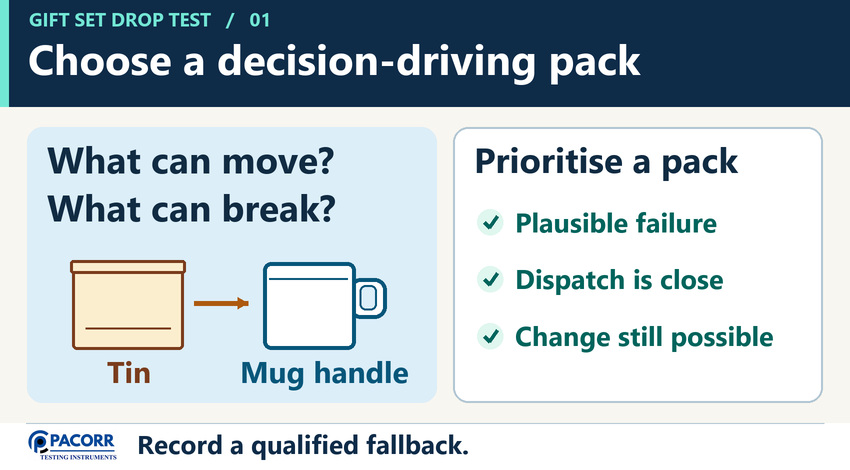
Take the promotion list to the packing bench. Pick up an assembled set and ask the packer to point to the item most likely to move and the part most likely to break. In a mug-and-tea set, those answers might be the tin and the mug handle. Look at the space between them. Is a folded divider the only thing keeping the metal lid away from the handle? If so, that small part deserves as much attention as the grade of the outer carton.
| Change at the packing bench | Why it matters | What to check before dispatch |
|---|---|---|
| Different gift ribbon | A wider ribbon or a larger knot may sit directly over the mug rim when the lid closes. | Close one representative pack and inspect the clearance around the knot. Mark the contact location on a photo if it bears on the ceramic. |
| Complimentary spoon | A loose metal spoon can slide between the cup and the tray. It introduces a hard surface close to the glaze. | Locate the spoon in the assembled and closed configuration. Show the packer exactly where it must be retained and ask QA whether the change needs a trial. |
| Different tin dimensions | Changing the tin height can shift where the lid bears against the insert. A shorter tin may have more space above it. | Compare the new tin with the approved part and photograph the difference. Identify the fold or stop that prevents it moving towards the handle. |
Give priority to a bundle that has a plausible failure, an upcoming dispatch and a packaging choice that someone can still change. If the sale is imminent, a previously qualified combination may be available as a fallback. Record its exact product code, insert revision and shipping carton. A note saying “use the usual gift box” is of little help to a temporary packer standing in front of two almost identical blanks.
Choose a drop method that matches the parcel and the decision
Establish what crosses the doorstep. Some sellers place a decorative box straight into a courier network. Others put that box into a corrugated shipper with supports around it. A retailer might add another outer carton after receiving the gift set from its supplier. Draw the handovers on the test request and name the company that packs the final shipping unit. If the courier receives a closed outer carton, that is the starting point for a test of the outbound parcel.
| Shipment or test objective | Method to discuss with the lab | Define the scope of the result |
|---|---|---|
| Free-fall impact comparison | ASTM D5276 describes free-fall drop testing of loaded containers. It can support a comparison between two inserts protecting the same product. ASTM's description of D5276 | Name the product, loaded container and acceptance checks. A buyer who requests a complete distribution test may also specify conditioning, vibration and other exposures in a particular order. |
| Individual parcel in India | ISTA developed Project 3P using research into the Indian parcel network. Review the current scope with the lab for the packed size, mass and delivery service. ISTA Project 3P for India | State where the courier takes possession of the sealed shipping unit. If a marketplace places the gift box inside another shipper, identify which business packs and controls that outer carton. |
| Individual parcel in North America | ISTA’s selection guide lists Procedure 3A for parcel delivery in North America. It also lists other programmes for specific retailer fulfilment arrangements. ISTA test selection guide | An Indian exporter may ship palletised cases to a distribution centre and then send individual gifts to doorsteps. Identify which leg each report covers and confirm the buyer’s written requirement. |
Before any drops, settle whether the work is a development comparison or a customer qualification. For development, an agreed targeted test can help decide which of two trays deserves further work. For qualification, the lab needs the required edition, sample plan, sequence and reporting instructions. Enter that purpose on the booking. It determines what the buyer can reasonably conclude from the eventual result.
Pack samples the way the fulfilment team will pack orders
| Packing stage | What the packer or inspector does | Evidence to retain |
|---|---|---|
| Identify the parts | Select the mug, filled tin, insert and presentation pack from identifiable production lots. Give each completed test parcel a specimen ID. | Tie the component lot numbers and drawing revisions to that ID. Preserve a reference set from the same lots and with the same finish for later inspection. |
| Inspect the gift before packing | Check the mug rim, body and both ends of its handle. Look at the tin lid and printed presentation surfaces before the gift disappears into the tray. | Record existing marks and photograph them under consistent lighting. A dated close-up can settle whether a fine line appeared during a drop or was already there when the mug left the shelf. |
| Assemble a saleable order | Ask a regular packer to follow the instruction displayed at the bench. Include gift messages, tissue, sleeves, seals and any complimentary items. | Photograph the open arrangement and then the closed shipper. Keep an unused insert flat so the converter can see its cut lines and intended fold directions. |
| Measure the closed parcel | Record the gross mass and the outside dimensions of the unit tendered to the courier. Identify how the presentation box sits in the shipper if an overbox is used. | Add the figures and units to the sample record. Leave enough information for another packer to assemble a comparable specimen without handling the original. |
Watch for choices the instruction leaves to the packer. A person may rotate the mug so the logo faces the customer, while another turns it until the handle rests in a cut-out. Both may believe the set looks right. Ask the packaging engineer which arrangements the drawing allows. If the direction matters for protection, add a clear photograph or change the insert so that the intended position is obvious to the next person packing it.
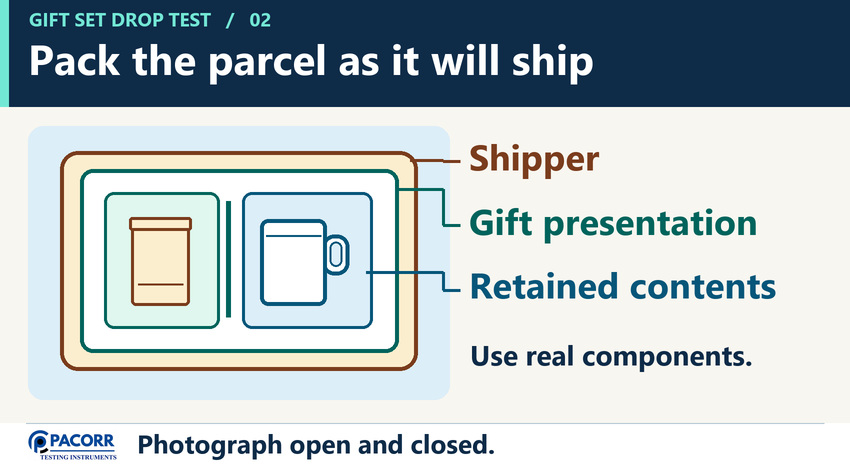
When selecting specimens, consider which variation could challenge the design. The shallowest insert and the tallest tin might create a tight fit at the lid. The narrowest mug may move farther inside a loose sleeve. Record how the samples were chosen, the range they represent and how many fresh builds the plan requires. Keep a reference set for comparisons during inspection. A good reference includes the parts from the same lots and the same gift finish.
Set pass and fail criteria before the parcel reaches the tester
Agree with the product owner and buyer what the recipient should be able to see and do. A mug should arrive with its handle attached and its rim free of chips. The printed gift sleeve might have a buyer-approved appearance sample. An outer shipper may tolerate a dent as long as its closure still contains the set and the presentation box meets the agreement. Record the inspection method and who can resolve a borderline cosmetic judgement. ISTA's 3A overview makes the shipper responsible for setting product and package acceptance criteria in advance. ISTA 3A overview
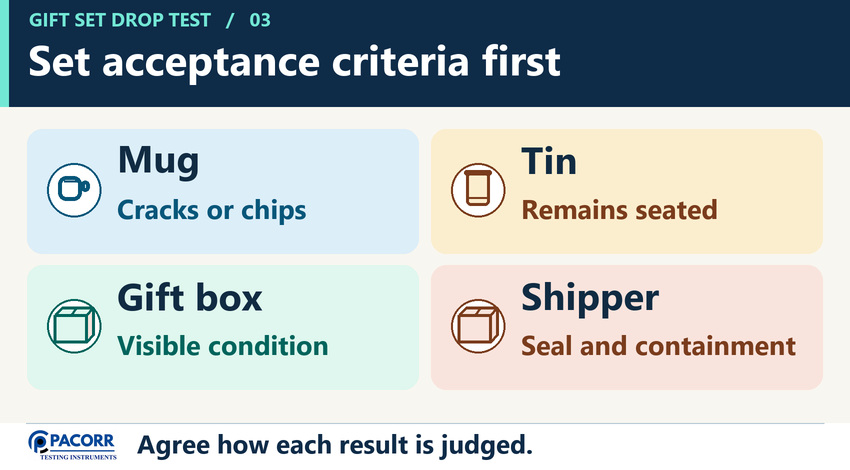
| Part of the gift set | Example acceptance check | Evidence to keep |
|---|---|---|
| Ceramic mug | Inspect the rim, body and handle for cracks or chips against the agreed criteria. | Before-and-after views under the same lighting. |
| Tin and divider | Check that the lid stays seated and the tin stays inside its assigned compartment. | A photo showing both parts before lifting either out. |
| Presentation box | Compare creases, rub marks and visible tears with the approved appearance sample. | Overall view and a close-up with the location identified. |
| Shipping carton | Check closure and containment against the order specification. | Images of the seals, corners and impact area. |
These checks illustrate a decision for one gift set. Write a different check if the product has a pump, hinge, clasp or removable stopper. Agree when and how to use that feature after testing. A photograph of a closed box cannot confirm that a hinged presentation lid still opens smoothly or that a pump still works. Keep the completed checks by specimen so an acceptable result for one sample cannot obscure a rejected one.
Mark the orientation and record what actually lands
Make a diagram of the closed package using the orientation convention in the chosen procedure. Add a second sketch showing the mug handle, tin and seams underneath those faces. Photograph the parcel with a clear reference feature, such as the shipping label or manufacturer's joint. Once a box has been turned over several times, “left corner” can mean opposite things to the technician who ran the test and the designer reading the report.
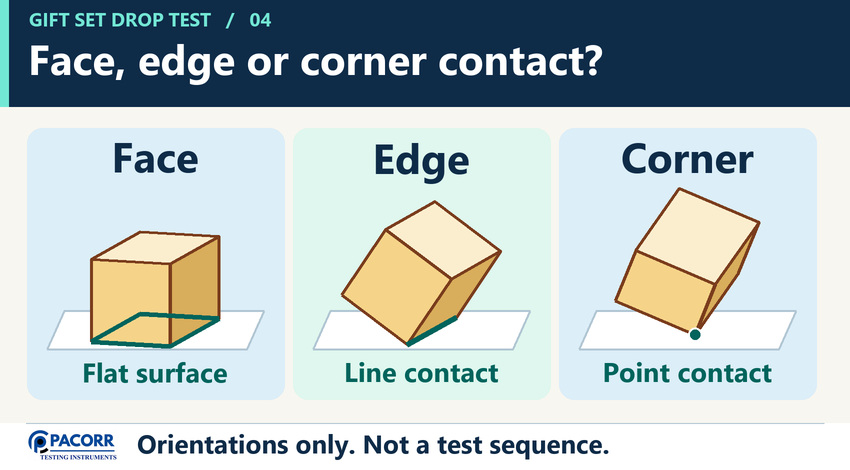
The laboratory should take the drop height, measurement reference, orientations, order and number of drops from the applicable procedure or agreed plan. The equipment must accommodate the gross mass and the parcel in each required position. A long gift carton that fits flat may need more clearance on an edge or corner. Pacorr lists face, edge and corner arrangements for its drop tester, subject to the selected configuration. Send the lab or supplier the erected dimensions and the orientation drawing when reviewing equipment suitability. Pacorr package drop tester
Use the laboratory's operating instructions and trained operator for the release. For each drop, record the planned orientation and the first contact the operator actually observed. Video from a suitable fixed position can help where an initial edge contact quickly becomes a second impact on a face. Label the recording with the sample and drop identifiers. If the release deviates from the plan, document the event and ask the test owner how to proceed. Repeating the drop on the same parcel adds another exposure.
Keep a run log that a colleague can interpret without the operator present. In the header, identify the specimen, pack drawing revision, contents, mass, dimensions, method and edition, equipment ID, conditioning history and date. For each event, enter the sequence number, specified height and units, intended orientation, observed contact, any visible change and the photo or video reference. At the foot of the sheet, leave space for deviations, final inspection and the release owner's name. For a refresher on the general setup, see Pacorr's guide to conducting a packaging drop test.
| Record field | Illustrative entry | How to read the entry |
|---|---|---|
| Specimen and event | G04; short tin, insert B; event 3 in the design trial. | Read the entry together with the header that identifies the approved plan, actual specimen and instrument. Keep the specified height and units on the actual run sheet. |
| Planned contact | Base edge beside the tin compartment. | Use the face and edge identifiers on the specimen sketch. The same expression can otherwise refer to different edges after the carton has been turned over. |
| Observed contact | Video G04-03 shows the specified edge contacting first, followed by the adjacent face. The outer tape stays closed. | The camera shows the closed parcel. It supports a finding about the first external impact, while the timing of the tin’s movement remains open. |
| Final unpacking | Photo G04-07 shows the tin lid above the pocket lip before either component is moved. | The agreed check requires the tin to stay in its compartment. Record a retention failure even if the ceramic and the outer carton appear intact. |
Compare prototypes when test stock is limited
Suppose the design team has two competing inserts and a small supply of decorated mugs. Use the drawings and inexpensive fit samples to answer the questions that do not require impact testing. Assemble each tray with a production tin. Check whether the lid can snag a fold and whether the visible face of the mug touches the box when the packer closes it. Eliminate a prototype that damages the gift during assembly before consuming saleable units on the drop tester.
For the remaining designs, decide what a comparison could actually establish. If all samples with insert A come from one mug shipment and all with insert B come from another, a difference in the ceramics could complicate the conclusion. Allocate representative components across the candidate builds, retain lot identities, and keep the packing method consistent. Where practical, ask the inspector to score the unpacked gifts against the agreed reference before revealing which design was fitted.
If only one specimen of a new colour or finish is available, tell the buyer what the team can learn from it. A prototype may reveal an obvious interference point or a tray that disengages. One intact mug gives little information about variation across a production order. Agree which question must wait for more stock. Save the scarce sample for the exposure that needs its actual finish, geometry or material and use the other components for bench checks.
Open the tested parcel without losing the evidence
Photograph all sides while the parcel is still closed. Find the intended opening and cut only the closure needed to lift the lid without disturbing the insert. Pause after each layer. The most valuable picture may show a tin leaning across a divider just before someone reaches in to straighten it. Use the agreed inspection point. Opening and repacking a specimen mid-sequence can change the way its parts respond to the remaining exposures.
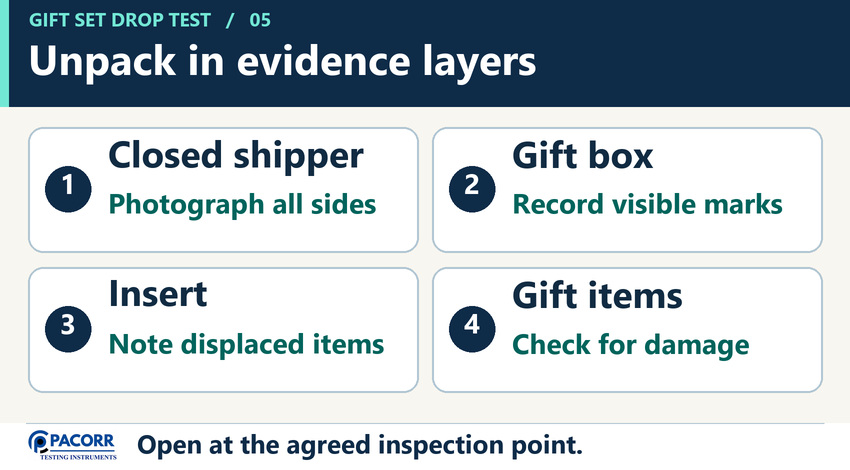
Lay the components out in the order they were removed. Compare marks that face one another in the assembled pack. For example, a curved scuff on the divider at the same height as the tin's lid suggests a contact point worth investigating. A scuff by itself does not establish which drop produced it. Note what was observed, what the team thinks caused it, and which additional comparison would distinguish that explanation from another one.
Look underneath a fragile component as well as around it. A tray can leave a concentrated impression beneath the foot of a mug while the handle appears to have plenty of clearance. If a broken piece is present, have the lab handle it under its specimen-handling procedure and retain the parts needed for the investigation. Identify the component and its location in the report before any damaged materials are cleared from the bench.
Worked example: a tea tin shifts when the gift box is turned over
Consider a hypothetical Black Friday bundle containing a ceramic mug and a lidded metal tea tin. Each sits in a folded paperboard pocket. A decorative sleeve covers the presentation box, which fits inside a separate shipper. Marketing has chosen a shorter tin for the offer. The new version fits the same pocket and looks almost identical when photographed from above. Purchasing asks whether the gift set can use the approval obtained for the taller tin.
An engineer measures the closed presentation pack and checks a section through the two pockets. The taller tin used to sit close to a folded bridge above it. The shorter tin has room to rise before the bridge catches it. When the pack is gently inverted during a fit check, a sample tin slips partly over the lip of its pocket. The team writes a specific hypothesis. Following an impact, the shorter tin could clear that lip and strike the edge of the mug pocket.
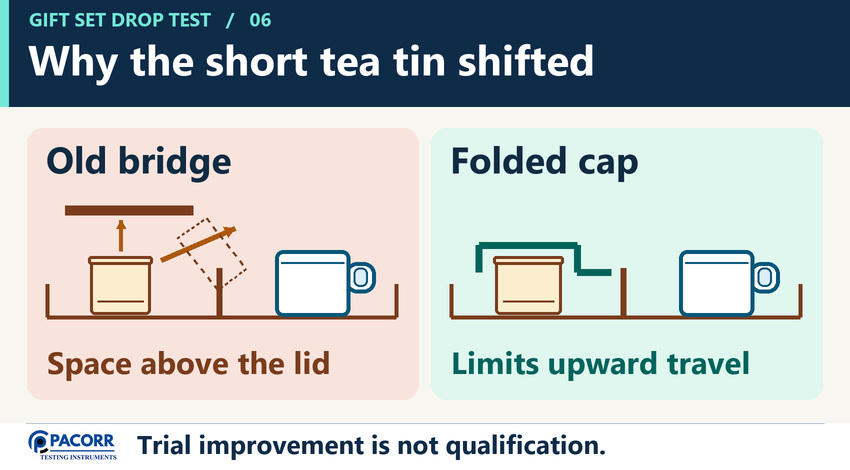
The team agrees that a tin crossing the divider fails the retention check, even if the mug survives. A chip or damage beyond the approved presentation sample also fails. The following comparison uses hypothetical observations from fit checks and planned trials. The team keeps the tin, mug, carton, closure and test conditions equivalent when comparing insert revisions on the short-tin builds.
| Build | What the team observes | Decision supported by the observation |
|---|---|---|
| Approved tall tin with original pocket | Before the trial, the taller tin sits close to the folded bridge above it. At final inspection after the agreed exposure, it remains inside its compartment. | Keep the photographs and measurements with this revision as the comparison reference. The approval applies to the tall-tin pack identified on the specification. |
| Short tin with original pocket | A fit check shows space above the lid. During gentle inversion the tin can rise partly above the lip. After the trial, the tin has tipped towards the mug, which remains intact. | Reject this build against the pre-agreed retention criterion. The observations support testing a way to limit upward movement. They do not identify the instant the tin moved during the closed-box sequence. |
| Short tin with deeper side wall | The converter raises the pocket wall to block sideways movement. During ordinary loading the raised edge rubs against the printed mug before the shipper is even closed. | Address the assembly contact before commissioning more drop tests on this design. A change intended to protect the mug in transit is already marking its visible finish on the packing bench. |
| Short tin with folded cap | The cap is cut into the insert blank, fits over the tin and clears the mug. In the development trial the tins stay seated and the inspected mug surfaces meet the agreed criteria. | Keep this candidate for the buyer’s required distribution sequence. Record the new crease seen on one cap and check whether the locking tab stays engaged through subsequent handling. |
For release, the buyer asks for the complete distribution sequence applicable to this order. The successful development comparison gives the engineer a candidate to submit. Dispatch continues using the qualified tall-tin configuration until the buyer's required checks on the short-tin version are complete. Both options get separate packing photographs. That prevents a later replacement order from combining a short tin with the old insert simply because the finished boxes share the same artwork.
Make the packing instruction work on a busy shift
Give the revised components to someone who did not attend the engineering trial. Ask that person to make up the set from the written instruction while the observer records any hesitation. Can the packer tell that the cap has locked before sliding on the sleeve? Does the assembly still work when the bench has both sizes of tin on it? A small viewing slot or a photo showing the engaged tab can make the difference between a repeatable pack and one that depends on memory.
Keep the release decision narrow enough for dispatch to apply. Identify the gift-set code, component revisions, dispatch site, service and any special instructions that affect approval. Add the drawing or photograph that shows how to tell the two inserts apart. If a supplier changes the board, the tin geometry or the way the insert is delivered, purchasing can point to the changed field and ask QA for a decision before the stock reaches the line.
Decide which parcels can leave before the courier cut-off
| Order on the packing line | Check available to the shift leader | Disposition |
|---|---|---|
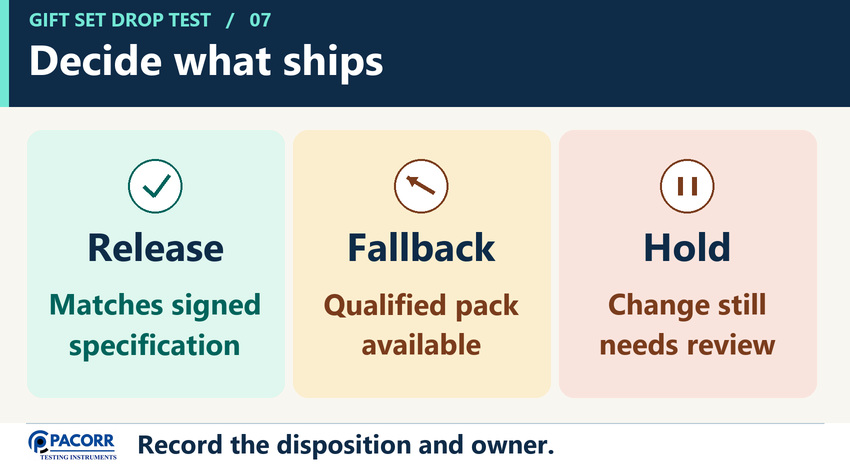
| Set matches signed specification | Match the gift-set code, tin reference, insert revision, packing photograph and courier service to the release record. | Release the matched order under that instruction. Keep the approved pack-out image at the station so a second shift can identify the same configuration. |
| Substitute tin from a supplier | Ask QA to compare diameter, lid shape and height with the approved component range. A tin from another lot can look similar in a photograph taken from above. | Use a documented, qualified fallback if one is available. Otherwise hold the affected combination until the responsible reviewer records a decision. |
| Handwritten card added at dispatch | Check whether the approved instructions provide a pocket for the card. Verify whether a loose card could slide between the mug and its support. | Use the designated position if the pack approval covers it. Refer a different arrangement to the designated decision owner before releasing that pack. |
Give the packing desk one place to find these decisions. Record which orders are released, which should move to a known alternative and which are on hold for an identified check. State who owns an open item and when dispatch will next hear from that person. If a supplier sends replacement stock just before collection, check the component reference against the release record. Carton artwork and an inbound delivery note can remain identical even when the insert inside has changed.
After the promotion, compare reported damage with deliveries of the same configuration over the same observation period. Keep the order reference, pack revision and photographs together. If complaints come mainly from one packing site, first check how that site assembled the parcel. If the same mark appears on different routes, inspect the matching part in the insert. A good follow-up gives the next trial a specific change to investigate, using evidence the business already collects.
Questions from packaging and fulfilment teams
| Question | Answer |
|---|---|
| What drop height should we use for a fragile gift box? | Use the height and measurement reference in the applicable test method, customer specification or agreed development plan. Give the lab the packed mass, size, delivery service and pack format so it can check the selection. Record the prescribed height with units. A machine's maximum travel describes its capability and should stay separate from the value chosen for the parcel. |
| Can we use a dummy mug to save saleable stock? | For early checks, a surrogate may help establish whether parts fit or whether the tin escapes a compartment. Discuss its limitations with the test owner. A weight block that matches the mug's mass can have a different shape, balance and response to impact. If a release decision depends on a ceramic rim or handle remaining intact, the plan needs evidence representative of those features. |
| Is it enough to test the heaviest version of the gift set? | Check the failure you are trying to prevent. A heavy tin could put more demand on its support, while a lighter, shorter tin may escape because of extra clearance. Measure the relevant differences across the range and write down which sample represents which concern. The qualification owner can then agree whether one build covers the family or whether another configuration needs its own test. |
| What if the carton looks fine but the gift is damaged? | Keep the interior in the post-test position and check for matching contact marks, displaced supports and clearance around the damaged feature. Compare with the pre-test photographs. If there is a history of collapsed parcels as well, investigate stacking resistance as a separate question. An assembled-carton compression measurement can help trace panel collapse, while the drop investigation follows the movement and protection of the contents. Pacorr box compression tester |
| What should we send Pacorr for a drop tester quotation? | Share the outside dimensions and gross mass of the smallest and largest packed gifts, the test method you intend to use and the orientations and heights it requires. Include a photograph of the closed shipper, its usual packing orientation and any space constraints at the lab. With those details Pacorr can discuss the platform, usable clearance and release arrangement for the packs you ship. |